Why is my mini split icing up? If you walk past your unit and see frost spreading across the coil, or you see a solid block of ice forming on the lines, then something is off. I'll walk you through exactly why it happens, what you can safely fix yourself, and when it's time to call in a pro.
Key Takeaways
-
Most mini split icing comes from restricted air flow across the indoor coil-dirty air filters, a dusty blower wheel or furniture blocking the unit are the usual causes.
-
Low refrigerant from a leak is the other big cause, and it drops coil temperatures below freezing so moisture turns to ice instead of draining away.
-
A light frost on the outdoor unit in heat mode is normal and should clear during the defrost cycle. Thick ice on the indoor unit or outdoor unit that does not melt on its own is a problem.
-
First steps: shut the system off, let the ice melt on its own, place towels under the indoor unit to catch water, then check the filters and airflow before you start it up again.
-
Cleaning the filters and clearing obstructions are DIY tasks. Anything that involves refrigerant levels, leak repair or defrost control issues needs a licensed HVAC technician.
How Mini Splits Ice Up
A mini split heat pump moves refrigerant between the indoor unit and outdoor unit. In cooling mode, the indoor coil acts as the evaporator-cold refrigerant absorbs heat from your room air, and moisture in that air condenses on the coil and drains away. In heat mode, the outdoor coil becomes the cold side, pulling heat from outside air. Mini-split air conditioning systems can ice up due to restricted airflow or refrigerant problems because either issue drops the coil surface temperature below freezing, so condensed moisture freezes instead of draining.
Is Ice on a Mini Split Normal?
-
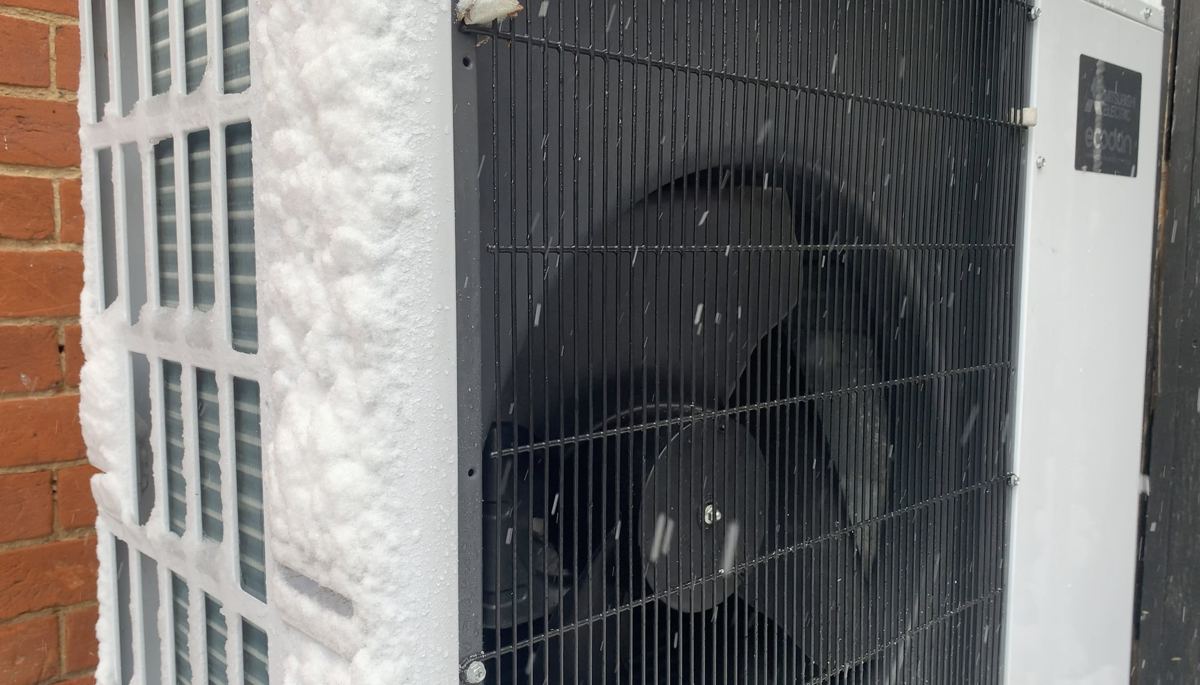
Outdoor units may get frost on their own when a heat pump runs in cold weather. The built-in defrost cycle should kick in about every 35–90 minutes and melt it off in 5–15 minutes.
-
A thin, even layer of frost on the outdoor coil that comes and goes is fine. A thick shell of ice that covers the fan blades or the entire cabinet is not fine.
-
Visible ice on the unit during cooling shows a freezing issue that needs attention. This ice can be on the indoor coil, the refrigerant lines or the plastic housing.
-
In Arizona's relatively dry winters, you usually won't see heavy outdoor frost. If you're in Mesa, Gilbert or Chandler and you've got big pieces of ice on the outdoor unit, that's a red flag.
Safety Steps for a Frozen Mini Split
If your mini split is iced up right now, here's what to do before anything else:
-
Turn the system off at the remote or wall controller first. If there is heavy ice or water pooling near electrical components, also shut off the disconnect or breaker.
-
Let the ice melt naturally. Don't chip ice off the coil, don't use a hair dryer, and don't pour hot water on it. Any of these can crack the indoor coil or damage the outdoor coil fins.
-
Place towels or a shallow pan under the indoor unit to catch water as the ice melts. Watch for dripping near wiring or the drainage system.
-
Once it is thawed, leave the system off until you've checked air filters and obvious airflow issues. If ice returns quickly after restart, stop and call a professional.
Common Causes of Mini Split Icing
Before getting into each one, here are the root causes I run into most often:
-
Restricted airflow at the indoor unit. Clogged filters, a dirty blower wheel or blocked return air are the usual problems, and this is the number one possible reason.
-
Low refrigerant from a leak drops coil pressure and temperature so ice forms on the indoor coil or refrigerant lines.
-
Dirty coils on the indoor or outdoor unit restrict the ability to transfer heat efficiently.
-
Indoor fan not moving enough air-weak fan motors, bad capacitor or dust-clogged wheel.
-
Blocked outdoor unit from leaves, debris or other obstructions blocking air flow.
Dirty Filters and Airflow Problems
What you can do right now:
-
Open the front cover of the indoor unit, slide out the filters you can use again, and clean them with a soft brush or mild soap and water. Let them dry fully before you put them back in.
-
Make sure vents are clear of obstructions. Furniture, curtains or shelving pushed against the indoor unit can prevent enough airflow from entering and leaving.
-
Check the blower wheel behind the filters. If it's covered in dust, that is further starving the coil of air. Light dusting you can handle, but heavy buildup usually needs a tech with the right tools.
-
In Arizona, check filters monthly, not "every few months" like the manual might say. Pets, construction nearby and dust storms make that schedule too generous.
Low Refrigerant and Refrigerant Leaks
-
Ice on the indoor coil or the larger refrigerant line (suction line)
-
Longer run times without reaching your thermostat set point
-
The system is running at full speed but still not cooling well
-
If you hear hissing near the flare connections at the outdoor unit, that could be a refrigerant leak
Low refrigerant almost always means there's a leak somewhere. Topping off without finding and fixing it is a waste of money and puts stress on the compressor. Inspecting the refrigerant charge and checking for leaks should be performed by a technician. Professional help is needed for refrigerant leak repairs-it is an EPA-licensed job. A qualified technician will weigh in the exact charge, check refrigerant levels, and run electronic or bubble leak detection on suspect joints.
Outdoor Unit Frost, Blocked Coils and Defrost Problems
Start by checking around the outdoor unit. Inspect it for debris that can block airflow. Leaves, dirt, weeds or anything piled against the coil can cause problems. Keep at least 2–3 feet clear on all sides so the unit can draw enough air. Insufficient outdoor airflow can lead to ice buildup on coils, and heavy ice on the outdoor unit may show airflow issues.
A dirty outdoor coil covered in dust or cottonwood seeds forces longer, colder cycles that allow heavy ice to form. The defrost cycle works by briefly switching into cooling mode to warm the outdoor coil and melt frost, then switching back to heating.
-
Ice that never melts off the outdoor coil
-
Outdoor fan buried in ice
Where Ice Forms Tells You a Lot
-
Indoor coil icing in cooling mode usually points to airflow problems or low refrigerant.
-
Heavy outdoor ice in heat mode often means a defrost issue or blocked outdoor coil.
Before calling a technician, note which mode you were in, where ice appeared and any error codes on the display. These details speed up diagnosis.
What to Check Before Calling a Pro
This is the DIY checklist I'd walk a friend through over the phone before sending out a truck:
-
Power off the system at the remote, then at the breaker if there is heavy ice.
-
Let ice melt completely. Do not force it.
-
Remove and clean air filters with a soft brush or rinse under water.
-
Check for obstructions and pull furniture and curtains away from the indoor unit.
-
Visually inspect the indoor coil for heavy dirt through the open filter panel, but do not take it apart further.
-
Check the outdoor unit and clear vegetation, trash or anything blocking the coil. Look for obvious damage but don't remove panels or tubing.
-
Run fan-only mode for 20–30 minutes after thaw to help dry the indoor coil and drip pan.
-
Avoid setting the thermostat too low on restart-setting it extremely cold makes the unit work too hard and can promote re-icing.
-
Monitor closely. If light frost appears but goes away, you're likely okay. If ice comes back within 30–60 minutes, shut down and schedule professional service.
-
Don't reset the breaker repeatedly if the outdoor unit trips it. That points to deeper electrical or mechanical issues.
When to Call an HVAC Technician
Triggers for calling a pro:
-
If the system displays an error code, schedule service
-
Unusual noises or breaker trips
One more thing worth knowing: in the Phoenix metro, icing that shows up in the nights can cost more to run on SRP's E-28 time-of-use plan. One July kWh used at 7 p.m. is about six times as much as one at 1 p.m. (39.82¢ vs 6.23¢). Letting an iced system struggle at full speed during peak hours is literally wasting peak-rate power.
Keep Your Mini Split from Icing Again
-
Filter cleaning: at least monthly during Arizona cooling season, more often with pets or nearby construction dust. Clean or replace filters every few months at minimum, but monthly is better here.
-
General upkeep: wipe indoor unit covers, check the condensate drain for drips or algae, and maintain a couple feet of open space around both indoor and outdoor units for proper airflow.
-
Schedule regular check-ups to inspect indoor and outdoor units every 1–2 years for deep coil cleaning, blower inspection, refrigerant check and sensor verification. Professional maintenance can prevent recurring icing issues before they start.