What to Know
-
Almost every permanently wired mini split requires a local disconnect by electrical code; a circuit breaker in the panel alone is not enough.
-
The disconnect has to be within sight of the outdoor unit, usually 3 to 6 feet away and not behind it, and it must be rated for the circuit amperage and voltage.
-
Pull-out, non-fusible AC disconnects are what most homeowners buy for this job, and they cost about $10 to $20 at any home improvement store.
-
In Mesa and most of the Phoenix metro, adding a new mini split and its disconnect will cause you to need a construction and electrical permit, even on a small backyard shed.
-
Skipping the disconnect can be one of the fastest ways to get red-tagged by a local inspector.
Mini Split Disconnects in Plain English
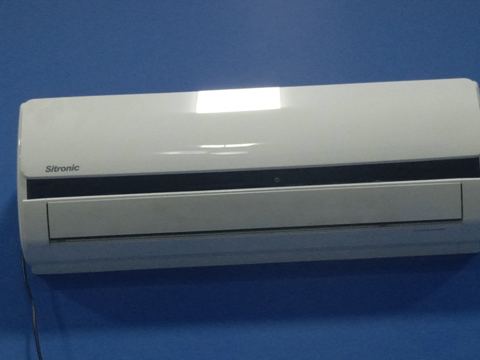
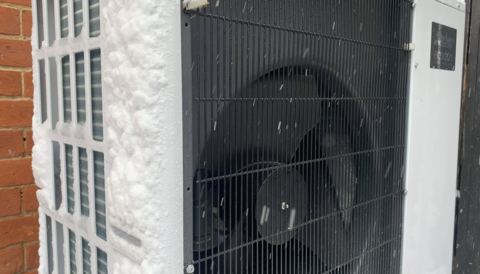
Does a mini split need a disconnect? A mini split is a ductless AC and heating system that has an indoor head and an outdoor condenser. They are connected to each other by refrigerant lines. If you have been reading installation guides or watching YouTube videos, you have probably heard about needing a "line-voltage disconnect" near the outdoor unit.
I am an HVAC guy based in Mesa, Arizona and I see DIY installs that are missing the outdoor disconnect all the time. The answers I get from you when I tell you that you need one range from "I thought the breaker was enough" to "that's crazy, I just ran the wire straight from the panel." Here is the core answer: if your mini split is hard-wired (not plugged into a standard receptacle), you need a disconnect within sight of the outdoor unit. The circuit breaker inside your house does not satisfy that requirement.
This post is written for you if you are running your own conduit, mounting disconnect boxes and coordinating with an electrician when needed. Local codes and utility rules (like SRP in the East Valley) can add extra requirements on top of the National Electrical Code, so you might want to check with your local building department.
Do Mini Splits Legally Need a Disconnect? (Code Basics)
Yes, in almost every real-world installation. NEC Article 440.14 requires a disconnecting means within sight of the outdoor unit so anyone servicing the equipment can shut power off where they can see it. Mesa follows the 2023 NEC plus local amendments, and inspectors enforce this in accordance with both.
The circuit breaker in your main panel does not count as the required "within sight" disconnect when the panel is around a corner or inside the house. "Within sight" means visible and no more than 50 feet from the unit.
The rare exception: very small plug-and-play mini splits on a 120 V cord and plug can sometimes use the receptacle as the disconnect, per NEC 440.13. But most 9,000 to 36,000 BTU systems in homes are hard-wired and need a separate switch. Inspectors in Mesa, Gilbert and Chandler routinely red-tag outdoor units that lack a visible, properly mounted disconnect next to the condenser.
Mini Split Disconnect vs Circuit Breaker: What's the Difference?
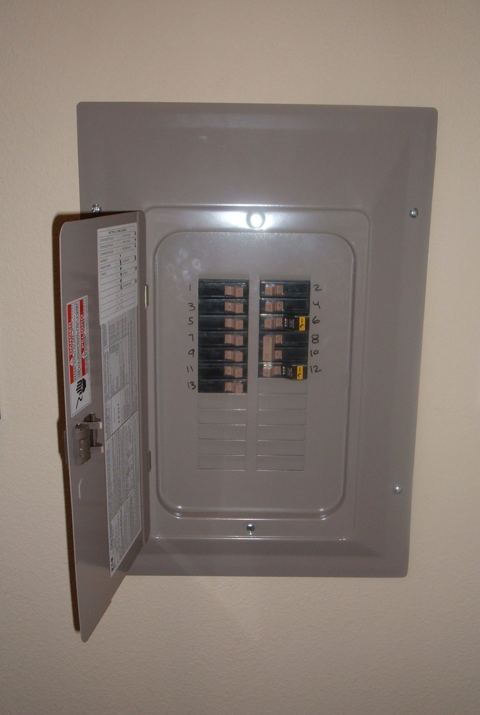
A lot of you think the circuit breaker in the garage panel is enough. From a safety and code point of view, these two devices do different jobs.
The circuit breaker:
-
Provides protection against too much current, and it is sized to the mini split's nameplate MCA and MOP
-
Sits in the service panel, and it is usually 15 to 30 amps for a single-zone system
-
Protects the wiring from too much load, short circuits and tripping when there are problems
The disconnect:
-
A local on/off switch or pull-out that is able to cut all hot wires to the outdoor unit
-
Must be within sight and readily accessible from the equipment
-
Must be rated for at least the circuit amperage and voltage (for example, a 60-amp, 240-volt non-fusible AC disconnect for a 25-amp mini split circuit)
Because the breaker protects the wiring, the disconnect is able to protect the person doing the service work by giving them visible, immediate control over power at the unit. Both have to be present.
Types of Disconnects for Mini Splits
For a typical 9,000 to 24,000 BTU ductless mini split, the most common choice is a non-fusible AC disconnect that is mounted next to the outdoor unit. Here are the three types you'll run into:
-
Non-fusible pull-out disconnects: A metal or plastic box that stands up to weather and has a removable handle that breaks the circuit when you pull it. It does not cost much, often under $15. It is the standard in residential installs. This is the product that most of you buy at Home Depot, Lowe's or Amazon.
-
Fused disconnects: Same appearance, but they include removable fuses that are sized per the unit's MOP. Needed when the equipment nameplate or engineer calls for fuses.
-
Lever-type safety switches: A handle you flip instead of pulling. More common on larger commercial or multi-zone systems that are above about 36,000 BTU/h.
For a standard inverter mini split, a 30- or 60-amp non-fusible AC disconnect that is matched to the circuit is the right choice for most homeowners.
Where Should the Mini Split Disconnect Be Mounted?
NEC's "within sight" rule translates into a simple rule of thumb: mount the disconnect where you can see both it and the outdoor unit at the same time, within 50 feet. In practice, inspectors want it within a few feet and not hidden behind the condenser or around a corner.
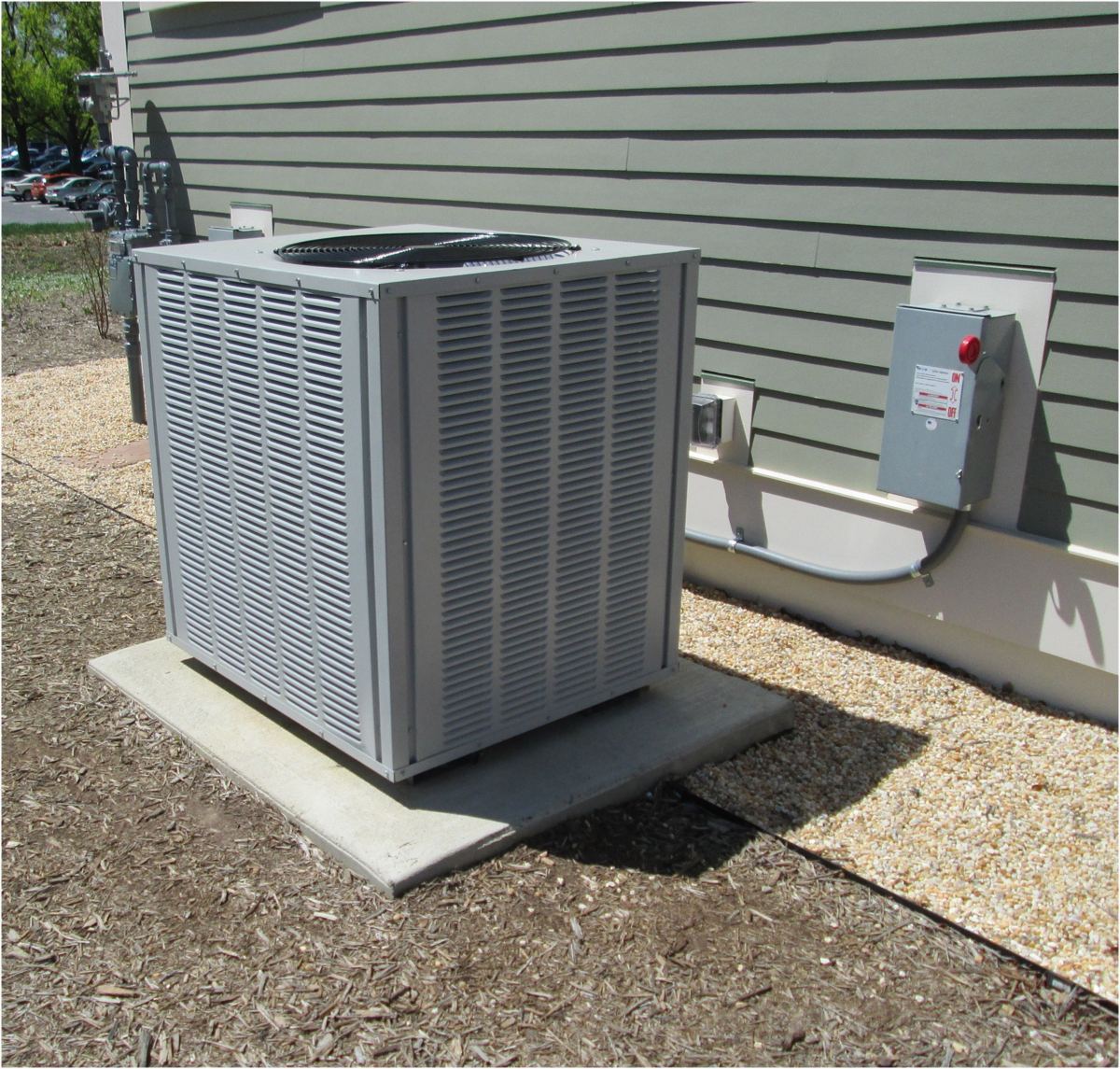
The ideal layout is a disconnect installed on the exterior wall, 3 to 6 feet from the outdoor unit, at about 4 to 5 feet off the ground (NEC 404.8(A) caps the handle height at 6 feet 7 inches). Conduit drops from the disconnect and goes directly into the condenser's electrical compartment.
The disconnect must be readily accessible. Do not put it behind bushes, inside a locked gate or buried behind the unit or a storage rack. In the Mesa and Phoenix area, sun and heat are intense, so use a NEMA 3R outdoor-rated enclosure and avoid a west-facing wall when you can. UV is breaking down plastic covers over time.
Wiring a Mini Split Disconnect Safely
Safety first: always shut off the main breaker that sends power to the mini split circuit, verify with a non-contact voltage tester, and call a licensed electrician if you are not 100% confident.
The basic power path for a typical 240 V mini split:
-
Service panel circuit breaker
-
Outdoor disconnect
-
Outdoor unit line-voltage lugs
-
Interconnect cable to indoor head
You'll run appropriately sized cable or THHN wires in conduit from the panel to the disconnect, then from the disconnect to the outdoor unit. Wire gauge must meet or exceed the mini split's nameplate MCA. Typical sizing by BTU: 15-amp breaker for 9,000 to 12,000 BTU, 20-amp for 18,000 BTU, 25-amp for 24,000 BTU, and 30-amp for 36,000 BTU.
The equipment ground wire must run continuously from the panel through the disconnect and onto the mini split chassis. You'll want to keep wire colors consistent: black and red for hot legs, green or bare for ground, and neutral only if the unit needs it. You will want to label the disconnect with the circuit number from the panel.
Permits, Mesa/Arizona Rules, and Utility Rebates
Even though a disconnect box is a $15 part, the permit and inspection side matters just as much.
The City of Mesa says you don't need a permit to replace an air conditioner if the new unit uses the same or less electricity than the old one. Changing the electrical connections does require a construction permit, so installing a new mini split with its own disconnect and breaker triggers a permit every time.
A detached shed or shop in Mesa under 200 sq ft needs no permit, unless it has electrical, plumbing or mechanical connections. Adding a mini split to a shed triggers a construction permit.
Modern inverter mini splits typically meet the Southwest region's EER2 requirements at 95°F (11.7 for split ACs under 45,000 BTU/h, 11.2 for larger ones, dropping to 9.8 when the model is rated 15.2 SEER2 or higher). That makes them good candidates for utility rebates.
SRP's Cool Cash rebate pays $75 per ton for a single-stage system, $150 per ton for multi-stage, and $225 per ton for variable-capacity or inverter mini splits (mini splits qualify as heat pumps only). The top payout is $1,125. SRP requires a Manual J load calculation for single-stage systems, but not for multi-stage or variable-capacity ones. On split systems, both the air handler and the condenser must be replaced. Thanks to these rebates, investing in the correct installation including permits can pay for itself.
Common DIY Mistakes With Mini Split Disconnects
I get plenty of calls from you after a failed inspection in Mesa, Queen Creek or San Tan Valley. The issue is almost always one of these:
-
No disconnect at all. You are relying on the breaker in the panel. Wrong every time.
-
Disconnect mounted behind the condenser. The inspector can't see it, and the tech can't reach it.
-
Indoor-only switch used outside. A box that is not made for weather in Arizona sun lasts about one rainy season.
-
Undersized disconnect. A 30-amp disconnect on a 40-amp circuit is unsafe and fails code.
-
Cord-and-plug shortcut. Using a GFCI receptacle on a system the manufacturer says must be hard-wired.
-
Sloppy wiring. No bushing where conduit enters the box, ground not connected properly, missing panel labels.
To get it right, read the unit's installation manual, match breaker and wire size to MCA/MOP, choose a disconnect with an equal or higher amp rating, and take clear photos before closing everything up. An inspector or electrician can review those photos and respond with fixes before you button up the conduit.
FAQ
Here are answers to the questions I found you asking most often about mini split disconnects.
Can I skip the disconnect if my mini split is on a dedicated circuit breaker?
No. In most areas that follow the NEC, a dedicated circuit breaker in the main panel is not enough by itself. You still need a disconnect within sight of the outdoor unit so a service tech can safely shut it off at the equipment. The motor and compressor inside that condenser can kill you if someone turns the breaker back on while you are working.
Does a 120 V, 9,000 BTU plug-in mini split need a disconnect?
When the manufacturer lets you use a cord-and-plug connection and the receptacle is within sight of the unit, that receptacle often counts as the disconnect under NEC 440.13. But many 120 V mini splits sold in the U.S. are still intended to be hard-wired. You must read the specific installation manual and agree to follow your local electrical code.
What size disconnect do I need for my mini split?
Look at the unit's minimum circuit ampacity (MCA) and maximum overcurrent protection (MOP) on the nameplate. Then buy a non-fusible AC disconnect rated at or above the circuit breaker size. A 30-amp disconnect handles most single-zone systems, and a 60-amp disconnect covers larger multi-zone units. You will want to view the nameplate before you buy anything.
Can I install the mini split disconnect inside my garage instead of outside?
The disconnect has to be within sight of, and readily accessible from, the equipment. For an outdoor condenser, this means you will be mounting it outside near the unit. Most inspectors in Arizona will not accept a garage-only disconnect for an outdoor mini split, because you cannot see the condenser from inside the garage.
Do I Need an Electrician for the Disconnect?
Many handy homeowners can physically mount a box and run conduit. The final terminations, panel work and permit sign-off should be done by a licensed electrician if local code requires it or if you are not completely comfortable working inside a live service panel. There are ways to handle the rough-in yourself and save money while letting a pro handle the hot connections.