If you're wondering what size wire for a mini split, you're asking the right question before you start installing. I've wired enough of these units in Mesa to know that getting the wire size wrong leads to tripped breakers, voltage issues, or worse - overheated conductors. This guide will help you determine the correct wire gauge, breaker size, and cable type so your mini split runs safely and efficiently.
Mini Split Wiring Basics and Wire Size
Wire size controls how much current can flow safely without the wire getting too hot, how much voltage you lose over distance, and whether your setup meets code. Undersized wire is a fire risk. Oversized wire can cost more and can be harder to run through your wall and conduit. Electrical specs for mini splits vary a lot by brand and model, so the recommended wire size for a mini split AC unit depends on the system's voltage and the unit's nameplate data - not a guess based on BTU alone.
Wire Size Chart for Mini Split Cable
Here's the list I use to get started on every job. These are the typical values for copper wire at 208–230 V:
| Unit Size (BTU) | Typical MCA (Amps) | Breaker Size (MOCP) | Copper Wire Size (AWG) |
|---|---|---|---|
| 9,000 (¾ ton) | 8–12 A | 15 A | 14 AWG |
| 12,000 (1 ton) | 11–15 A | 15–20 A | 14 AWG |
| 18,000 (1.5 ton) | 15–18 A | 20–25 A | 12 AWG |
| 24,000 (2 ton) | 18–22 A | 25–30 A | 12 or 10 AWG |
| 36,000 (3 ton) | 25–30 A | 30–40 A | 10 AWG |
| 48,000 (4 ton, multi-zone) | 35–45 A | 50–60 A | 8 AWG |
Use 14 AWG wire for mini split systems drawing under about 15 amps on short runs. 12 AWG wire is commonly used for mid-sized mini splits requiring a 20A breaker. And 10 AWG wire is often the gold standard for larger multi-zone mini splits requiring a 30A breaker.
If you have a long wire run, you may need to use a bigger wire gauge to limit voltage drop. If your distance from the main panel to the outdoor unit is more than 50–75 feet one-way, bump up one gauge size.
How to Read Mini Split Cable Labels
Here's what the labels on your mini split cable and wire actually mean:
-
THHN vs. THWN: THHN is thermoplastic high-heat nylon coated. THWN adds a moisture rating. Most mini split wiring uses THHN/THWN-2 rated for 90°C, but terminal connections are usually rated at 75°C - that's the number you size ampacity from.
-
Conductor count and color codes: Four wires are standard for mini split wiring. For 240 V units, you'll usually have two hots (black and red), a ground (green), and sometimes a neutral. Most mini splits need a separate low-voltage communication wire between the indoor and outdoor units - usually 14 AWG or 16 AWG 4-wire cable designed for that purpose.
-
Voltage and temperature ratings: Mini split systems usually need a 600 V rating on the cable insulation. Check the nameplate for whether your unit is 208–230 V or 115 V.
Wire Size, Distance and Voltage Drop
Don't size wire off BTU alone. You should read the nameplate on the outdoor unit. The manufacturer's specs for a mini split should include Minimum Circuit Ampacity (MCA) and Maximum Overcurrent Protection (MOP). MCA tells you the smallest wire ampacity that is allowed. MOP tells you the biggest breaker that is allowed.
Compliance with National Electrical Code (NEC) guidelines and local codes is necessary for mini split installations.
Voltage drop step-by-step:
-
Find MCA from the nameplate
-
Measure one-way distance in feet from panel to unit
-
Here's how to calculate it: Voltage Drop = 2 × Length × Current × Resistance per foot
-
You'll divide by the rated voltage, then multiply by 100 to get the percent
Example A - 25 ft run, 20 A, #12 copper, 240 V: Drop ≈ 2 × 25 × 20 × 0.001588 = 1.59 V → 0.66%. Pretty safe.
Example B - 100 ft run, same setup: Drop ≈ 2 × 100 × 20 × 0.001588 = 6.35 V → 2.65%. That's close to the limit. Voltage drop starts to matter for wire runs that go past 100 feet, so I'd bump to #10 or #8 depending on the situation.
Steps to Run Mini Split Cable
-
Power off. Shut down the breakers at the main panel before you touch any wire. No exceptions.
-
Route cable through a suitable metal or PVC conduit wall sleeve when you go through exterior walls. Use grommets to protect against wear.
-
Secure cable with clamps every 4–5 feet to keep strain relief, especially near the ends where the wires connect.
-
You'll want to seal wall penetrations with foam or silicone to keep the weather out.
-
Refrigerant warning: Brazing, vacuuming and charging refrigerant lines is a licensed job. Don't DIY the refrigerant side.
Sub Panel and Breaker for Mini Split
A sub panel makes sense when your main panel is full, when the unit is in a detached building like a shed or shop, or when running a long feed from the house would mean expensive oversized wire.
-
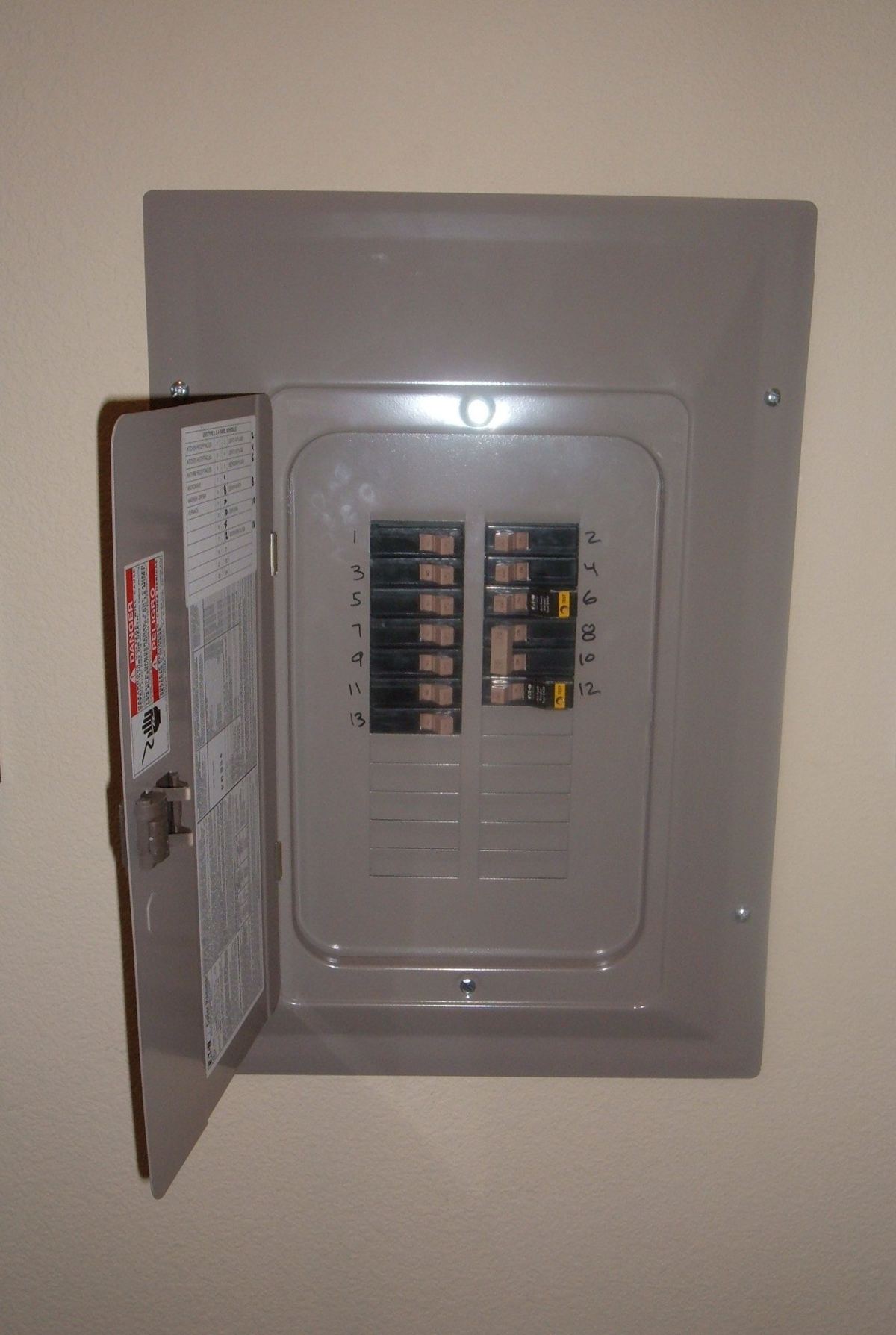
Breaker sizing: Use a double-pole breaker for 240 V units. The breaker rating must not go over the nameplate MOCP. A dedicated circuit and an outdoor service disconnect are usually needed for mini splits.
-
Grounding and neutral: At a sub panel, the neutral bus must be kept separate from ground. Ground bonds to the panel enclosure. A ground rod is needed.
-
Dont double-lug. Never share breaker lugs with two wires unless the panel is specifically listed for it. Check your panel's circuit capacity and apply derating for ambient temperature if the equipment is in a hot space like an Arizona attic.
Common Wiring Scenarios and Examples
Single-zone small unit (12k BTU, 230 V): The MCA is about ~12 A, and the MOCP is 20 A. Use #14 copper THHN in PVC conduit, with a 20 A double-pole breaker. Parts you'll need: 14 AWG wire, disconnect box, Romex or THHN depending on location, wall sleeve, sealant.
Multi-zone inverter (36–48k BTU): The MCA is 35–45 A, and the MOCP goes up to 60 A. Wire: #8 AWG copper. Breaker: 50–60 A. This is not a small project - plan for heavier conduit and a mount point that can handle the weight.
Long-distance run (75+ ft, 20 A MCA): With #12 copper at 75 ft, voltage drop hits ~3.2%. If you change to #10, the issue goes away. Always check the math before you buy.
Tools, Materials and Cable Options
Here's what I bring on every job where I wire a mini split:
-
Wire cutters, fish tape, voltage meter
-
PVC conduit benders, drill with hole saw
-
Torque screwdriver for terminal screws
-
Cable clamps, sealant, wall sleeves
I recommend copper wire over aluminum for branch circuits - better conductivity, fewer reactions at connections and more limited risk of oxidation. When you compare mini split cable versus THHN in conduit, most installers run THHN/THWN in conduit from the panel to the disconnect. The manufacturer's power whip covers the last bit to the unit. Order 10–15% extra wire length for routing, bends and pull-backs.
Permits, Codes and Rebates in Mesa, AZ
Here's advice from doing this work locally. A detached shed or shop in Mesa under 200 sq ft needs no permit - unless it has electrical, plumbing or mechanical connections. Adding a mini split to a shed will trigger a construction permit, which covers the wiring, disconnect and panel work.
SRP Cool Cash rebates are worth knowing about:
-
Single-stage: $75/ton
-
Multi-stage: $150/ton
-
Variable-capacity/inverter mini splits: $225/ton (top payout $1,125)
SRP needs a Manual J load calculation for single-stage systems but not for multi-stage or variable-capacity ones. On the old efficiency rules: the national minimum for split-system heat pumps made since 2023 is 14.3 SEER2 and 7.5 HSPF2. The Southwest rule also sets an EER2 floor at 95°F - 11.7 for split ACs under 45,000 BTU/h. More efficient inverter units sometimes allow a bit smaller wire since their MCA can be lower.
Safety, Troubleshooting and Calling a Pro
Always turn off power at the panel and verify with a multimeter before touching any wire. This is non-negotiable.
Refrigerant work requires a licensed HVAC technician - charging, brazing and vacuum work are regulated and dangerous.
Quick tests you can safely do: compare voltage at the panel versus at the outdoor unit terminals to find voltage drop. Check wire temperature at connection points for signs of overheating. Look for discolored insulation or a burnt smell.
Call a licensed electrician or HVAC pro if your wire run exceeds 75 feet, if the unit is multi-zone with high MOCP, if permit requirements are a question, or if the nameplate data seems wrong or limited.
Example Calculations and Wiring Diagrams
Ampacity check for a 24k BTU unit: The nameplate MCA = 20 A. #12 copper at 75°C is rated ~25 A per NEC Table 310.16. After derating for conduit fill and ambient temp, it might drop to ~22 A. Since 22 A is more than 20 A, #12 is suitable. Breaker: ≤ MOCP (often 30 A for this size). The wire is protected by both the breaker and its own ampacity margin.
Simplified wiring path: Main panel → dedicated double-pole breaker → wire in conduit → outdoor disconnect (within sight of unit) → outdoor unit. Indoor unit is connected to outdoor unit via separate power and communication cables. Ground is run continuously from panel to unit.
FAQ and Quick Answers
Can I use 14 AWG? Yes, if the unit's MCA is under ~15 A, the run is short and your breaker is 15–20 A. Read the nameplate - that's the final answer to this question.
Mini split cable vs. branch-circuit wiring? Mini split cable often comes pre-attached to the unit. Branch-circuit wiring is what you run from the panel to the disconnect in conduit. They're separate things - don't share or swap them.
Rule of thumb? Under 20 A MCA → #14. 20–30 A → #12 or #10. Over 30 A → #10 minimum. If you're still curious or the run is long, always size up. An old picture of "one wire fits all" is wrong - every unit is different.
Conclusion and Next Steps
To find the correct wire size: read the nameplate MCA, check your run distance and pick the right AWG from the table above. Redo drafts of your plan if needed - getting this right matters. Share this post with anyone you know who's planning a mini split install. And hire a licensed pro for refrigerant work - that point is non-negotiable.