I wire mini splits in Mesa, AZ for a living, and this question comes up on every 18k BTU install. The short version: your wire gauge depends on the nameplate, not a generic chart. Here's how to get it right the first time.
Key Takeaways
-
Most 18,000 BTU 240V mini split systems use 12 AWG copper wire on a 20 to 25 amp breaker, but the only correct answer is what's printed on the outdoor unit's nameplate (MCA and MOP) and in the installation manual.
-
You'll usually run 12/2 or 12/3 copper cable from the main panel to the disconnect box, then a short electrical whip to the outdoor unit. Running between the indoor unit and the outdoor unit, the wire that lets them talk to each other is usually 14/4 copper with the usual wire construction.
-
Voltage, wire length, local codes and your specific model (Mitsubishi, Fujitsu, MrCool, etc.) can all change the required gauge wire and breaker size.
-
Wire size may need to increase if the distance from the electrical panel to the unit is over 50 to 100 feet.
-
If you're not 100% comfortable in a breaker panel, it's a good idea to hire a licensed electrician or HVAC pro. Always shut power off completely, pull the dead-front and verify with a meter.
What an 18,000 BTU Mini Split Needs
An 18,000 BTU mini split system is about 1.5 tons of cooling capacity, which is enough to handle one large room, an open-concept living area or a small apartment. Electrical sizing matters because wire that is too small can get too hot, and a breaker that is too big won't protect the equipment or your home.
Wire Gauge and Breaker Size for 18,000 BTU Mini Splits
Most 18,000 BTU 240V mini splits call for 12 AWG copper wire on a 20A breaker, and sometimes you might need a 25A breaker, depending on the specific model. For an 18,000 BTU system, the Minimum Circuit Ampacity generally ranges from 12A to 18A, and the Maximum Overcurrent Protection is usually 20A to 25A.
Here are some concrete combinations you might see on real nameplates:
-
MCA 14A / MOP 20A (common on high-efficiency inverter units): 12 AWG copper, 2-pole 20A breaker.
-
MCA 18A / MOP 25A (some brands with higher starting current): 12 AWG copper, 2-pole 25A breaker.
-
Rare 115V 18k unit, MCA ~18A / MOP 25A: 10 AWG copper often recommended, especially on runs over 50 feet.
For the power feed, 12 AWG copper wire is standard for a 20-amp circuit on most medium-capacity mini split systems. Use THHN/THWN in conduit or 12/2 NM-B where code lets you. The communication wire between the indoor and outdoor units is separate (often 14/4 with the usual wire construction). Aluminum cable is generally a poor choice for short residential mini split runs, so this guide uses copper.
Never size wire from an internet chart alone. Always verify the specific manufacturer's recommendations for wiring and circuit breakers, then cross-check with local codes.
Reading the Nameplate for MCA, MOP and Wire Gauge
The best way to choose gauge wire is to start at the data plate on the outdoor unit, not at a generic BTU chart. Ampacity tables can guide your choice of wire gauge for safety, but the nameplate gives you the actual numbers for your unit.
Here's how to read it:
-
Spot "MCA." This is the minimum ampacity your wire and circuit must carry. The MCA already includes the 125% continuous load factor required by NEC Article 440, so you don't need to add another safety margin.
-
Spot "MOP" or "MOCP." This is the largest breaker or fuse size that is allowed for that mini split unit.
Walk through a real example. A Daikin 18,000 BTU outdoor unit lists MCA 15.8A and MOCP 20A. That means:
-
Wire must carry at least 15.8A safely. 12 AWG copper is rated for 20A at 75°C ends, so it works.
-
Breaker must not exceed 20A. You'd install a 2-pole 20A breaker.
Local inspectors in hot areas like Mesa can be strict because ambient temperature and attic runs reduce ampacity under NEC 310.15. That can force you to use a larger gauge wire even when MCA looks fine on paper.
Typical Mini Split Wiring Paths from Panel to Disconnect to Outdoor Unit
Mini split wiring can be broken into three parts:
-
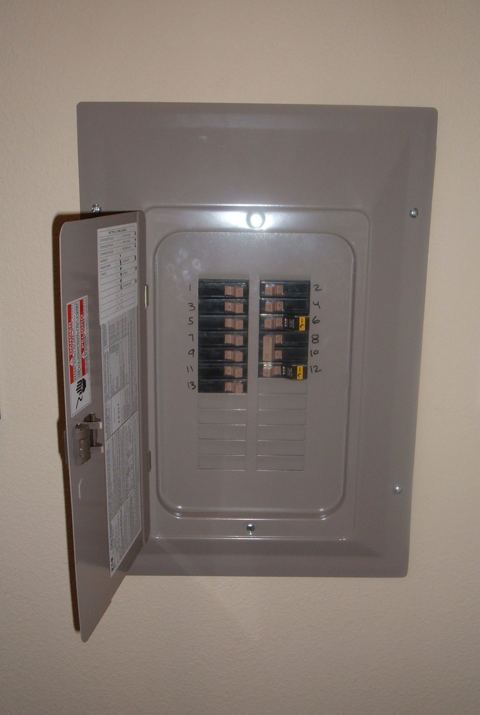
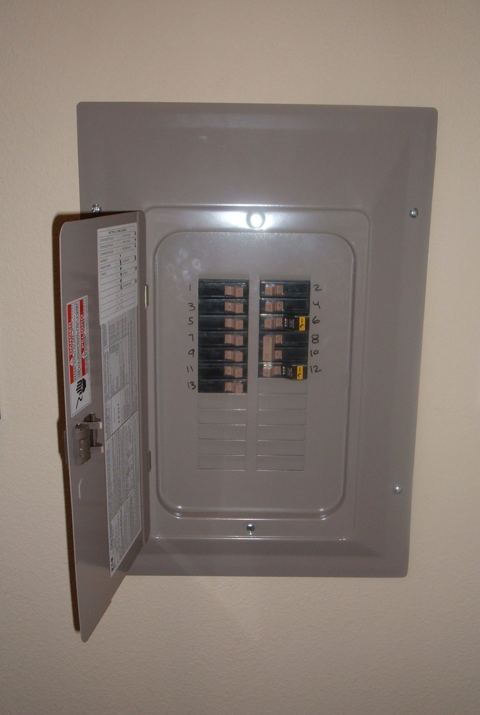
Main panel to disconnect box. Line power runs from a dedicated breaker in your electrical panel to a weather-resistant disconnect box near the outdoor unit.
-
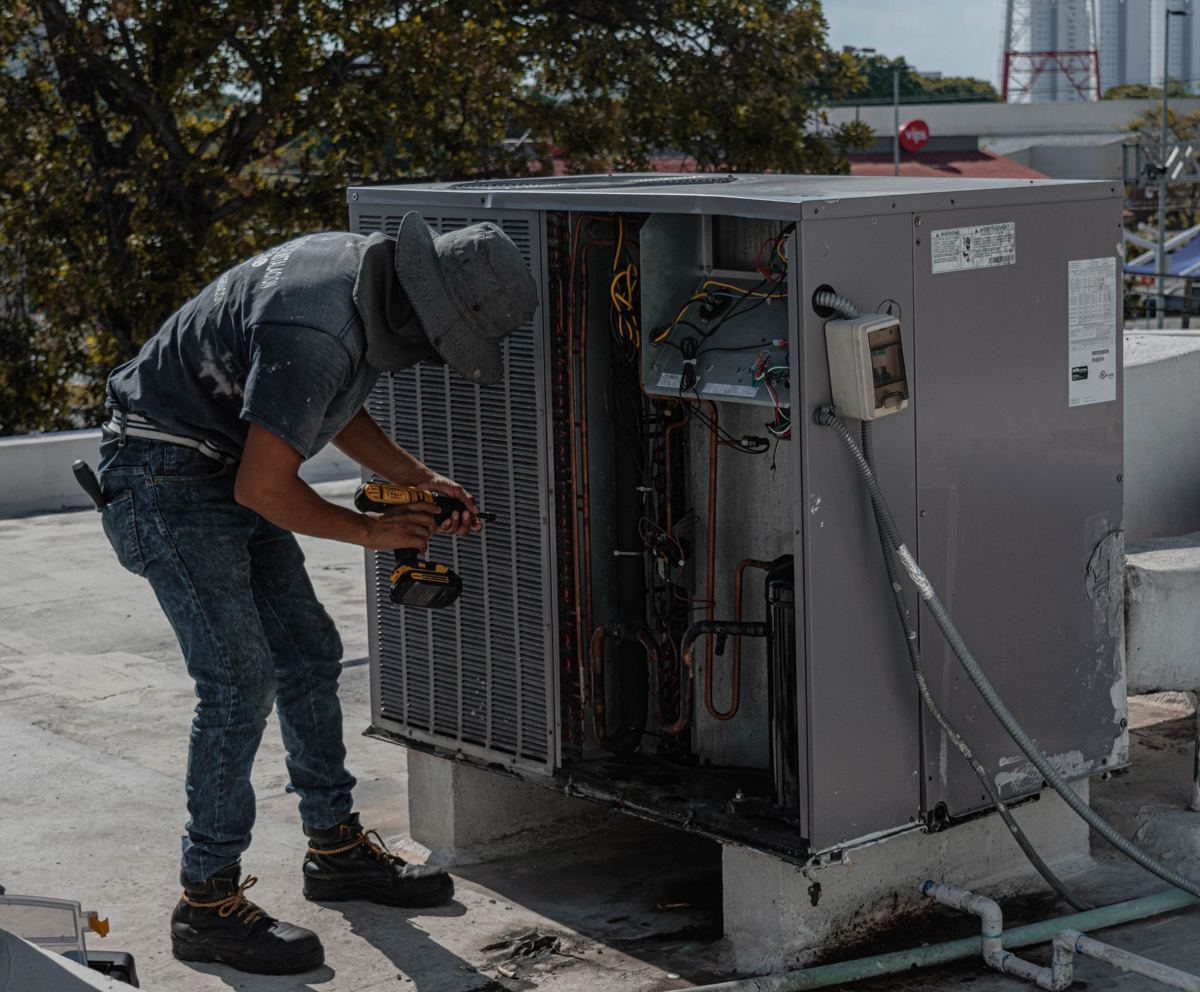
Disconnect box to outdoor unit. A short whip (usually flexible liquid-tight conduit with THHN/THWN wires) connects the disconnect to the condensing unit.
Power supply wiring includes a main power supply wire and a communication cable between indoor and outdoor units. A dedicated circuit means no other outlets, lights or equipment share that breaker. The National Electrical Code mandates dedicated circuits for major appliances, and mini splits fall squarely in that category. Dedicated circuits help avoid tripping other breakers in the panel.
NEC 440.14 requires a disconnect within sight of the outdoor unit. A disconnect switch must be installed outside the unit in a weatherproof enclosure. A non-fused disconnect is acceptable if the breaker is sized correctly per MOP, though some jurisdictions require fused types. The electrical whip from the disconnect box to the outdoor unit is usually a short run of the same gauge as the feeder, and for most 18k BTU systems that's 12 AWG.
Wire Gauge for 18,000 BTU Mini Splits by Voltage and Distance
These are general guidelines. The installation manual and local codes still beat any chart.
For typical 208/230V 18k BTU units (MCA 14-18A):
-
Up to ~75 feet from panel to unit: 12 AWG copper with a 20 to 25A two-pole breaker is usually enough.
-
75 to 150 feet: consider using a larger size with 10 AWG copper. 10 AWG copper wire is recommended to minimize voltage drop over longer distances in mini split installations, especially in hot climates where the heat pump runs hard all summer.
For reference on other sizes: a 36,000 BTU mini split usually needs #8 AWG wire, which shows how quickly wire size grows with capacity.
Do not undersize wire below system lows for safety. Undersized gauge wire gets too hot, damages insulation and creates fire risk. Oversizing slightly (going from 12 to 10 AWG) is fine if the ends on the outdoor unit accept it, but the breaker must still match MOP, not the thicker wire gauge. Aluminum wires have lower ampacity and need a larger size than copper. For typical homeowner installs, you'll want to stick with copper.
Communication Wire Between Indoor & Outdoor Units
Common setups:
- Interconnecting cable usually needs 14 AWG or 16 AWG copper wiring with the usual wire construction, depending on the manufacturer's specs.
This wire is not the same as the line-voltage feeder from the panel. It still carries power and is critical to safe operation. The wrong gauge or wrong type causes communication errors and fault codes. Use sunlight-resistant, 600V-rated cable. Shielded cable helps near RF or EMI sources (ham radio antennas, large motors) to cut down on noise.
Breaker Size, Dedicated Circuits & Mini Split Electrical Requirements
Breaker size, wire gauge and mini split electrical requirements all have to line up with MCA, MOP and code. If you get one wrong, you're looking at nuisance trips, damaged boards or a failed inspection.
Choosing breaker size:
-
MOP 20A: use a 2-pole 20A breaker with 12 AWG copper.
-
MOP 25A: use a 2-pole 25A breaker with 12 AWG or 10 AWG copper (verify the unit's terminals accept the wire size).
-
MOP 30A (less common at 18k BTU, but MRCOOL lists MOP 30A on some 18k DIY units): 10 AWG copper with a 2-pole 30A breaker.
Mini splits need a dedicated circuit to prevent overloads. Each mini split must have its own dedicated circuit breaker. No other outlets, lights or equipment on that breaker. Label it clearly ("18k BTU Mini Split") at the breaker panel for future service.
For Arizona homeowners, here's a note: APS won't disconnect residential service for nonpayment from June 1 through October 15. SRP has suspended disconnections all of July and August and during Extreme Heat Warnings. But neither policy protects against overcurrent or code issues. Proper breaker sizing still matters regardless of your utility's shutoff rules.
DIY Limits, Code and Calling a Pro
Mini split wiring combines line-voltage electrical work in the panel with outdoor equipment connections. Mistakes here are expensive or dangerous.
Homeowner safety rules:
-
Always shut off main power before working in the panel or disconnect box. Verify with a non-contact tester or meter that the circuit is completely dead.
-
Never upsize the breaker beyond the mini split's MOP to stop nuisance tripping. Fix the cause (loose connectors, wrong gauge wire, bad ground wire connection) instead.
-
Use properly rated cable: THHN/THWN in conduit outdoors, NM-B or MC cable indoors where code lets you. Weatherproof fittings around the outdoor unit are required.
When to call a licensed electrician:
-
If you're comfortable running conduit but not opening the main panel to land a new 2-pole breaker.
-
If your home has an older 100A panel that may not have room for another dedicated circuit.
-
If your city (Mesa, Phoenix, etc.) requires a permit and inspection for new circuits.
Refrigerant line installation and charging are separate from wiring, and in Arizona and most states only licensed techs can legally handle refrigerant. This post is about mini split wiring only.
You'll want to check for rebates before hiring a pro. Efficiency Arizona lists up to $8,000 for a qualifying heat pump (up to $14,000 per household depending on income), though their site warns of "significant changes" coming due to a federal notice. Since January 1, 2023, split-system central ACs installed in Arizona, California, Nevada and New Mexico must hit at least 14.3 SEER2 under 45,000 Btu/h, so confirm your unit calls for that rating before buying.
Mini Split Wiring Tips from the Field (Mesa, AZ Perspective)
In Mesa, I see a lot of 18k BTU mini split installations where homeowners pulled 12 AWG wire for a short garage-to-wall run and everything checked out fine. But on longer runs through attics where summer temps hit 130 to 140°F, I often bump from 12 AWG to 10 AWG for 18k units to keep voltage drop and wire temperature in check.
Condenser lugs sometimes don't accept very large wire. When I have to size wire up for the feeder, I'll land the larger gauge in the disconnect and then connect a short section of the correct smaller gauge to fit the terminals, as allowed by the manufacturer and inspector.
A few more field notes:
-
Mount the disconnect box on a solid wall within sight of the outdoor unit. This saves headaches for future service and code requires it.
-
In Arizona's monsoon season, surge protection is not optional in my book. Electrical surges can impact mini split performance by frying inverter boards. A mini split surge protector can safeguard against voltage spikes, and surge protectors can prevent damage from lightning surges. Look for a device that is UL 1449 listed and rated for 240V outdoor use. Quality units can handle surge currents up to 100,000 amps. For the cost of a good surge protector (often under $100), you're protecting an inverter board that costs $400 or more to replace.
FAQ
Can I use 14 AWG wire for an 18,000 BTU mini split?
-
14 AWG copper is limited to 15A circuits. Most 18k BTU mini splits need at least a 20A breaker and have an MCA above what 14 AWG can legally carry on a power circuit.
-
For the main power feed, 14 gauge wire is too small for almost all 18,000 BTU units and is not code-compliant.
Can two mini splits share one circuit?
-
By definition, a dedicated circuit serves only one piece of equipment. Each mini split usually needs its own breaker and wiring run.
-
Adding a second mini split to the same breaker could overload the circuit, break code and void warranties, even if the breaker doesn't trip right away.
-
Run separate dedicated circuits and disconnect boxes for each outdoor unit unless the manufacturer's documentation approves a different configuration.
Is aluminum wire okay for an 18,000 BTU mini split?
- Aluminum wire can be legal for certain feeders, but it has lower ampacity and requires a larger gauge than copper, plus anti-oxidant compound and special terminations.
Do I need a surge protector for my 18,000 BTU mini split system?
-
Surge protectors aren't always required by code but are strongly recommended, especially in lightning-prone or monsoon areas.
-
Install it between the breaker panel or disconnect box and the outdoor unit using a device rated for 220 volt outdoor use.
Can I wire a mini split without being an electrician?
-
Many handy homeowners can mount the indoor head, run conduit and attach the disconnect box. Working inside the main electrical panel carries higher risk and may require a permit.
-
A solid hybrid approach: you run conduit and mount the disconnect, then a licensed electrician lands the breaker and makes final line-voltage connections at the panel.
-
Improper wiring can void warranties, fail inspection or cause fires. Hiring a pro for the electrical work is often cheaper than replacing a damaged mini split system later.