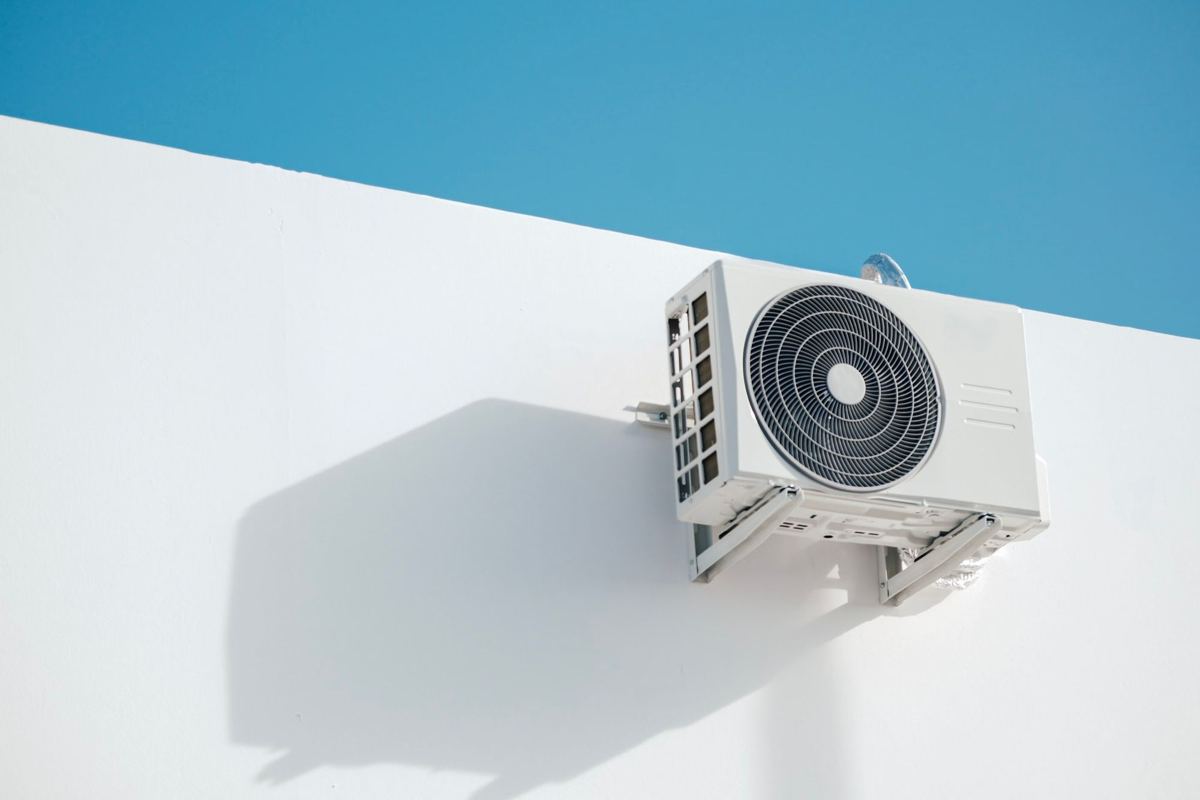
If you're wondering how far a mini split condenser can sit from your house, you're asking the right question before you pour a pad or drill a hole. I've seen homeowners in Mesa stick the outdoor unit right under a bedroom window and regret the noise, and I've seen others try to hide it 80 feet away in a back corner and run into performance problems. Let me walk you through the real limits.
What to Know First
-
The typical maximum distance for a mini split line set is 50 to 100 feet for most residential single-zone systems, with some inverter models going past 150 feet when sized and charged correctly.
-
Past about 50 feet, you generally need a licensed technician to handle the extra refrigerant charge and to get the line sizing right.
-
Both horizontal and vertical separation have manufacturer limits. Most units cap the height difference between the condenser and the air handler at 25–50 feet.
-
Follow the install manual, local code and 2024 IRC M1305.1.3.1 for pad height. The outdoor unit has to sit on a level base that is at least 3 inches above grade.
-
Any work that opens the refrigerant circuit must go to an EPA-certified tech. Federal law (40 CFR 82.154(a)) bars anyone from venting refrigerant on purpose.
How Far Can a Mini Split Outdoor Unit Be From the Indoor Unit
Most residential mini splits allow a total line set run of 50 to 100 feet between the condensing unit and the indoor unit. Many systems are factory pre-charged for about 15–25 feet of line. Brands like Panasonic allow up to 66 feet on 9–15k BTU units, while Fujitsu pushes some single-zone models to 98 feet. Premium multi-zone or VRF configurations can handle 200+ feet of total combined piping across all zones.
The condenser can sit away from the exterior wall. It can sit around a corner, on a stand across a patio, or on a pad in the side yard-as long as you stay within the model's maximum horizontal separation (total line length) and maximum vertical separation (height difference). The installation manual for each model can give you guidelines on the minimum space and distances.
My rule of thumb: try to keep single-zone runs under about 50 feet unless you've checked that the manual supports more and you have a licensed tech handling charge and commissioning. Every brand and model is different, so the install manual is the boss.
How Line Set Length Affects Performance
The line set is the pair of copper refrigerant lines-liquid and suction-plus control wire and drain that connect the outdoor unit to the indoor unit (your air handler). Every mini split manual lists three critical numbers:
-
Factory pre-charge distance (often 15–25 ft)
-
Maximum total line length is usually 50–100+ ft
-
Maximum vertical separation and sometimes a minimum length
When you approach maximum distance, more refrigerant is needed to fill extra tubing, friction causes pressure drop in the lines, and you lose capacity-commonly 5–15% near the limits even with correct charge. In extreme heat like Mesa summers, that loss stings.
Mini splits can connect multiple indoor units to one outdoor unit. Multi-zone systems have separate specs: a total combined line length across all indoor units and a maximum per branch. Planning must keep each indoor unit under its own limit and the system under the combined limit.
Guessing on extra refrigerant is not a DIY job. Wrong charge can kill the compressor or wreck efficiency, and federal law prohibits venting refrigerant. Use the manual's line length and elevation tables during planning, then have a pro confirm the final route and charge.
How Far From the House Can the Outdoor Unit Go?
Realistic horizontal ranges:
-
Under 25 ft: Plug-and-play for many pre-charged kits. This is the easiest setup for DIY-friendly installs.
-
25–50 ft: Common in real installations-side yard, back patio, around a corner. Still easy to handle with standard line sizing.
-
50–100+ ft: Possible on certain models but demands careful path planning, larger line sets and professional commissioning.
On SRP service in Mesa, adding a big new load might bump your home past 225-amp service. That raises the monthly SRP service charge from $30 to $40-so factor placement and new circuit loads into your plan before you lock in a far-away condenser location.
Condenser Below or Above the Indoor Unit?
Most mini split manuals cap vertical difference between outdoor unit and indoor unit at 25–50 feet. Some specify different limits depending on whether the outdoor unit is above or below the indoor unit.
Common layouts and what to expect:
- Ground pad + second-story indoor unit: Usually 10–15 ft of vertical rise. Usually fine.
Large vertical separations cause oil return problems to the compressor. Oil pools in pipes that go up if they aren't trapped correctly-some manuals need oil traps every certain number of vertical feet. Keeping distance from the ground also helps you avoid snow and ice buildup that affects how the unit runs in cold climates. If you're going more than about one story (15–20 ft), get an experienced mini split installer involved early.
For park models and RV setups around Mesa, vertical separation is usually small, but permitting and pad rules still apply. The condensate drain from the air handler also has limits-if the outdoor unit is much lower, you may need a condensate pump to avoid backflow.
Clearances, Code and Mounting the Outdoor Unit
Here are typical clearance guidelines:
| Area | Minimum | Preferred |
|---|---|---|
| Wall behind unit | 4 inches | 8–12 inches for easier maintenance |
| Sides / fences | 12 inches | 18–24 inches for better airflow |
| Front (service panel) | 20–24 inches | 30–36 inches for technician access |
| Above the unit | 4 feet | 4–5 feet of clearance above the condenser unit |
| Between multiple outdoor units | 2 feet | 2–3 feet apart if multiple units exist |
Keep at least 12 inches from walls and fences. Provide 18 to 24 inches for better airflow around the unit. Allow 4 to 5 feet of clearance above the outdoor unit so hot exhaust air doesn't recirculate back into the condenser coil. Allow 30 to 36 inches in front of the service panel and diagnostic ports so technicians have room. Space outdoor units 2 to 3 feet apart if you have a multi-zone configuration. Local building codes may impose specific clearance requirements beyond what the manufacturer lists-check before you pour a slab.
Per 2024 IRC M1305.1.3.1, ground-mounted equipment such as a condenser must sit level on a slab or approved base that is at least 3 inches above surrounding grade. Keep shrubs cut back at least 2 feet from the unit, and avoid placing condensers under roof valleys where water and debris hammer the fan and coil. In a sun-baked climate like Mesa, some shade helps performance, but never block airflow with a solid enclosure. Also review any HOA setback rules before you lock in a spot.
Planning the Route and Where Everything Goes
Choose your indoor unit location first. So where should you put a wall-mounted air handler? Mount it high on an interior wall with a straight shot to the exterior wall. Keep it clear of the ceiling by the manufacturer's minimum (usually 4–6 inches), away from heat sources, and out of the wind path of doors.
Common line set routing patterns:
- Around corners using creative routing-every bend counts toward equivalent line length.
Because SRP's E-28 plan makes 7 p.m. power about six times more expensive than 1 p.m. (around 39.82¢ vs 6.23¢ per kWh), many Mesa homeowners use mini splits for zoned pre-cooling during cheap midday hours. Good placement and short line routing make that zoning schedule more efficient. But while you can plan the route and install covers, any work on copper lines, flares, evacuation and charging must be handled by an EPA-certified technician.
DIY vs Pro Work
-
Pulling low-voltage control wire if local code lets you
-
Running and flaring refrigerant lines or connecting pre-flared kits
-
Pulling a vacuum, checking tightness, adjusting charge and opening service valves
-
Any work that could vent refrigerant-federal law (40 CFR 82.154(a)) bans it, certified or not
-
Sizing and installing new high-voltage circuits, especially when distance creates voltage drop
If you're in Mesa and installing a mini split on a park model or RV site, Mesa charges about $212 per appliance permit for air conditioning or heat pump equipment-that's a separate line from standard house permits. You'll want to factor that cost and the condenser distance into your project budget.
FAQ
Is it okay to bury mini split line sets underground to reach a distant condenser location?
Some manufacturers allow line sets in sealed conduit underground for short stretches, but they must be protected from corrosion and accessible at connection points. Every buried foot counts toward your total line length. Always confirm in your specific install manual and with local code before you bury refrigerant lines inside any conduit.