I get this question constantly from homeowners who want to add cooling to their garage workshop or home gym: can you just stick the mini split condenser inside the garage and skip the outdoor install? Short answer - don't do it. Here's why, what actually happens when you try, and how to set things up the right way.
Key Takeaways
-
If you absolutely must use a garage or covered parking area, you need an engineer to design the ventilation with large wall openings for air to flow through, exhaust fans and space around the unit that meets code.
-
When you put a condenser in a garage, the unit runs less efficiently and your manufacturer warranty can be voided.
How Mini Split Condensers Work
Here's what happens during operation:
-
Cooling mode: The indoor unit will absorb heat from the garage air and send it through refrigerant lines to the condenser unit outside. With a fan and coil, the condenser can get rid of that heat to the surrounding air. Once the refrigerant has cooled, it will cycle back inside to grab more heat.
-
Heating mode: A heat pump can run the process in reverse. The condenser is able to pull heat from outdoor air, even when that air is cold, and send warm air to the indoor unit. A heat pump moves heat rather than producing it, so heat exchange with outside air is essential.
Can a Mini Split Condenser Go in a Garage?
For 99% of homeowners, the answer is no - do not put a ductless mini split condenser in a garage that is closed up. A condenser unit needs outdoor air to run efficiently, and a standard residential garage doesn't give it that.
-
Mini-split manufacturers clearly state that outdoor units must be placed in outdoor environments. Their installation manuals list these as "outdoor units" for a reason.
-
In most home setups, a garage doesn't have the continuous fresh air supply that is needed to keep the condensing pressure and temperature in the safe range.
-
Some commercial or engineered setups use mechanical ventilation and large vents, but that is not a DIY or everyday solution for you.
-
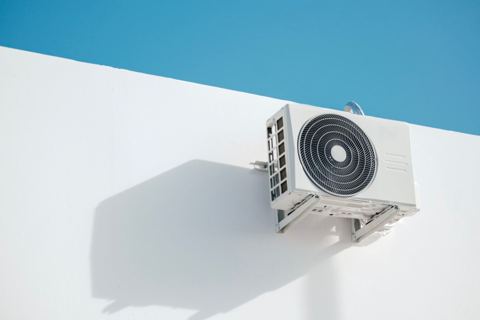
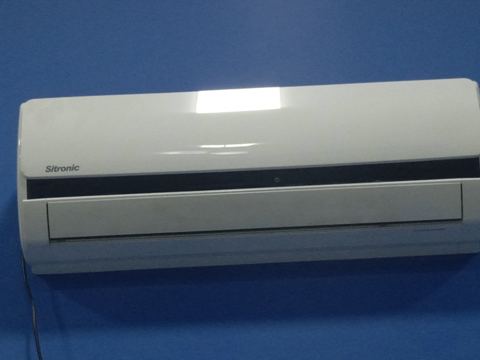
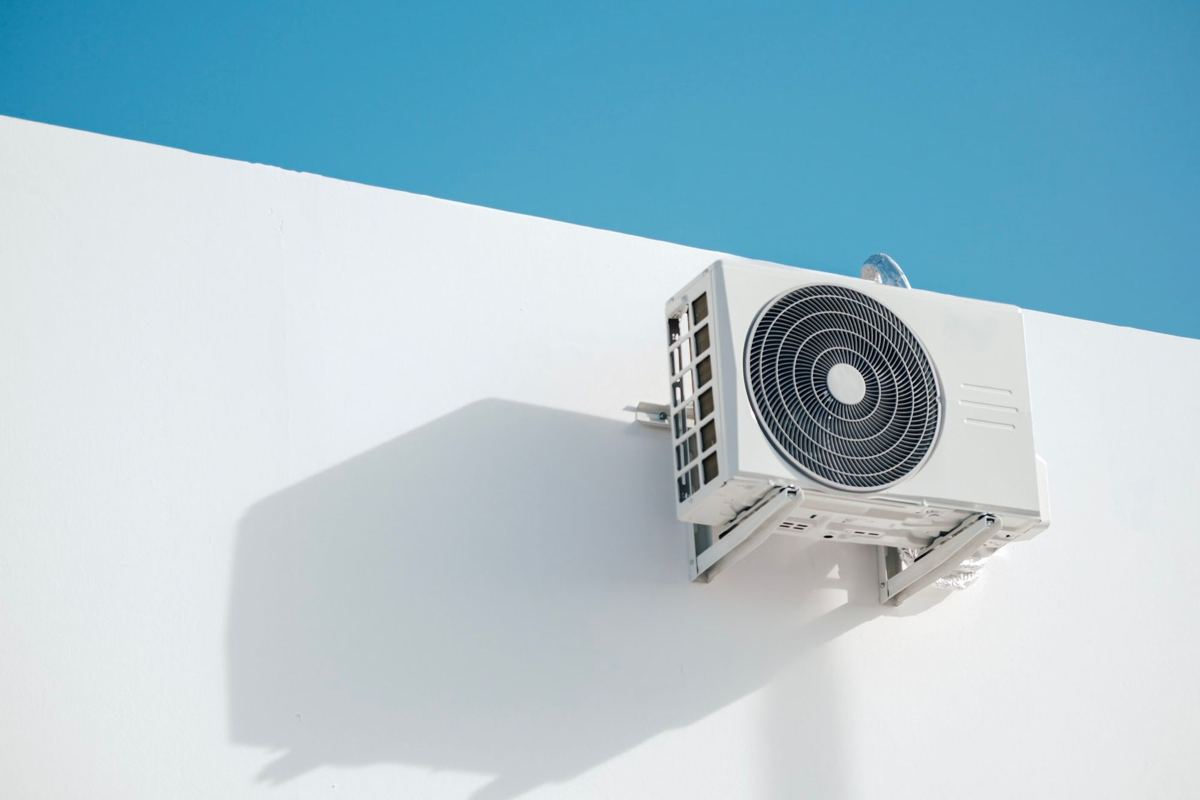
The practical alternative is to keep the condenser outdoors on a pad or wall bracket. You can use the garage for the indoor unit, and run the refrigerant and electrical lines through the wall. That is how mini split systems are designed to operate.
What Goes Wrong With a Garage Condenser
-
The condenser is blowing hot air into the garage. In an enclosed space, that heat is building up fast. With summer ambient in Mesa, AZ hitting 110°F, the garage inside gets even hotter.
-
As garage air gets warmer, the air conditioner has to dump heat into already hot air, so cooling capacity drops and run time goes up. A study by Maghrabie et al. showed that raising ambient from about 91°F to 122°F increased power consumption by about 33% and reduced the temperature difference across the condenser by about 77%.
-
When temperatures in a garage are elevated, it can lead to compressor overheating and the unit will use more energy. If the refrigerant can't turn into liquid properly because the surrounding air is too hot, the high head pressure can trip safety controls or damage the compressor.
-
Heat pumps do poorly in confined spaces like garages. In heating mode, a condenser inside a garage may not successfully extract heat from the cold air because it cools the limited garage air volume rapidly, cutting capacity further with each cycle.
-
The garage becomes a heat loss loop: the unit pulls heat out, the space gets colder and defrost cycles increase.
-
Garages can hold chemical vapors and contaminants that can damage condenser coils - car exhaust, paint exhaust, sawdust and oil mist all speed up corrosion and clog fins.
-
Noise and vibration inside a sealed space are a lot louder than outdoors.
-
More dust and debris means maintenance will be more frequent and more expensive.
Code, Manufacturer and Safety Considerations
Here's what the rules and manuals are saying about where to put the condenser:
-
Most mini split installation manuals are specifying an outdoor location with minimum space on all sides and need free access to outdoor air for the condensing unit. Typical installation requirements call for 12–24 inches on sides and several feet above so air can flow freely.
-
Putting a condenser in a garage often breaks those airflow and space requirements, which can void the manufacturer warranty. If the compressor fails and the tech sees the unit crammed in a garage, you will have a hard time with that warranty claim.
-
The 2024 IRC M1305.1.3.1 says ground-mounted equipment like a condenser has to sit level on a slab or other approved base. That base has to be at least 3 inches above the surrounding ground. Building codes treat these as outdoor appliances.
-
Fire and exhaust safety matters: gas cans, paints and solvents are normal in garages. If you add hot electrical equipment and refrigerant lines near combustible materials, it increases risk if the installation is not done per code.
-
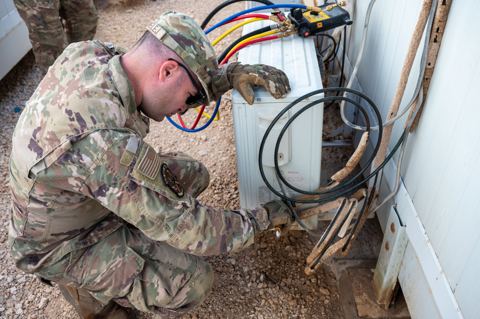
Any refrigerant work - opening the system, charging, recovering - has to be done by an EPA 608-certified tech. Since January 1, 2018, federal rules (40 CFR 82.154(c)) bar selling refrigerants like R-410A or R-454B to anyone who isn't certified. If you are a homeowner, you can install a pre-charged system but you can't legally buy refrigerant to top it off.
Garage Air vs Outdoor Air
"Air volume" is just how much air is in the room. "Ventilation" is how fast that air gets replaced with fresh outside air. Here's why both of these matter a lot for a condenser:
-
For a typical two car garage, say 20 ft × 20 ft with a 9 ft ceiling height, you're looking at about 3,600 cubic feet of air. A 400-square-foot garage with an 8-foot ceiling has less air volume at 3,200 cubic feet. Either way, it is a limited box. A standard garage is a confined space that causes condensers to reuse their own exhaust air.
-
During summer in a closed garage, the same BTUs reuse through the condenser over and over, pushing the internal temperature well above outdoor ambient. Research from the Florida Solar Energy Center suggests efficiency drops about 1–1.2% per °F increase in ambient air entering the condenser between 82°F and 100°F. With a 20°F rise inside the garage, you could see a 15–20% drop in capacity and efficiency.
When a Garage-Like Space Might Work
I want to be clear - this is not a DIY recommendation. These are rare, engineered scenarios:
Better Places for a Mini Split Condenser in a Garage
Here are practical placement options with the pros and cons for each:
- Concrete pad next to the garage wall - the default and best option. You have to follow code: the slab must be at least 3 inches above the surrounding ground per 2024 IRC. It needs to be level, with good drainage. The unit is kept on the other side of the wall from the indoor unit for a short line set run.
Things to avoid:
Designing a Garage Mini Split System
If you're adding AC or heat to your garage, here's the right way to plan it:
- A 9,000 BTU mini split works for a garage that is compact and well-insulated. But a 20 ft × 20 ft garage with 10 ft high ceilings in Mesa, AZ sun - that is a bigger cooling load. Don't size just by square footage on the sales sheet.
Indoor Unit in the Garage, Condenser Outside
Here's how the components are lining up from inside to outside:
- All high-voltage wiring to the outdoor unit must follow local electrical code. In many cases, it needs a dedicated breaker and a nearby disconnect box.
What Homeowners Can Do Themselves
-
Federal refrigerant rules are worth saying again: since January 1, 2018, refrigerants like R-410A and R-454B can't legally be sold to non-certified individuals. Topping off or repairing leaks needs an EPA 608-certified tech.
-
Use a licensed electrician for running new 240V circuits to the condensing unit, especially in garages where GFCI requirements may apply.
-
Misplacing a condenser in a garage to "keep it out of the weather" often voids warranties and can lead to premature compressor failure - which wipes out any DIY savings fast.
Garage Mini Split Maintenance Tips
Garages are dusty, rough environments. Your system is going to need a little more attention than a bedroom unit:
-
Check and clean or replace filters in the indoor unit every month during heavy use. ENERGY STAR notes that airflow problems can cut system efficiency by up to 15%.
-
The EPA recommends at least MERV 13 filtration for central systems, or as high as the fan and filter slot can accommodate. For mini splits, use the best filters that manufacturer has approved.
FAQ
What if I build big wall vents in the garage for the condenser?
To truly make a garage condenser room act like outdoors, you'd need very large intake and exhaust openings - and usually powered fans sized by an engineer to move enough CFM. Cutting in a couple of small grilles is better than nothing but still not equivalent to an outdoor location, and may not meet code or manufacturer requirements. If you're going to that much trouble and expense, it is almost always cheaper and more efficient to just mount the condenser outside.
Is an Attic Better Than a Garage for a Condenser?
An attic is usually worse. In summer, attic temperatures run 20–40°F above outdoor ambient, creating even more heat for the unit to fight. Air volume is usually very low, and insulation can get sucked against the coil and block air intake. Never place a ductless mini split condenser in an attic. The attic should only be used for running line sets if needed - not for heat release equipment.
How Does Garage Ceiling Height Affect Mini Split Sizing?
Higher ceiling height increases the volume of hot air the system has to cool, which raises the needed BTU capacity compared with a standard 8 ft room. With very tall ceilings - 12 feet or more - you may need a larger capacity mini split, careful indoor unit placement aimed to push air down into the work area, or circulation fans to prevent a layer of warm air from pooling near the ceiling. Factor ceiling height into your cooling load calculation, not just floor square footage.