A DIY 3-zone mini split system connects one outdoor condenser to three indoor units, giving you independent temperature control across three separate rooms without traditional ductwork. Between 2024 and 2026, DIY mini split systems have surged in popularity thanks to dramatic cost savings over professional installation, flexible room-by-room climate control, and increasingly homeowner-friendly equipment. This article compares the MRCOOL DIY 5th Generation multi zone system and Pioneer 3-zone ductless mini splits, with a focus on real installation details, specs, and practical guidance for anyone considering the investment.
Two concrete examples anchor this comparison: the MRCOOL DIY 5th Gen Multi-Zone 36,000 BTU 3-zone bundle and a comparable Pioneer 3-zone 36,000 BTU heat pump system. Whether you need to cool a finished basement, heat a home office through winter, or keep three bedrooms at different settings on the same night, these systems can deliver all season comfort without ducts. Zone Air is a third pre charged DIY option worth pricing against both: its 3-zone systems are sold direct at zone-air.com, and it gets its own notes in the comparison, line set and buying sections below.
What Is a 3-Zone DIY Mini Split System?
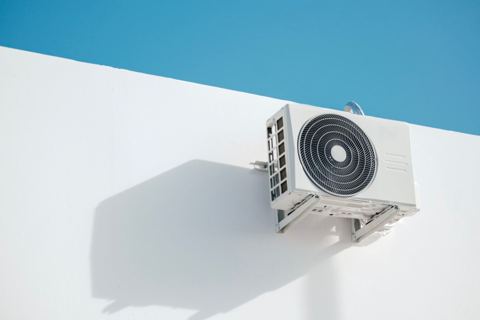
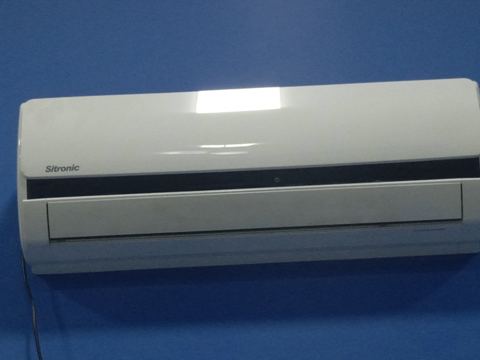
A 3-zone mini split is one outdoor unit (the condenser and heat pump) connected to three indoor air handlers, each controlling temperature in a separate room or zone. High-efficiency mini splits utilize inverter-driven compressors that adjust output dynamically, ramping up or down based on demand rather than cycling on and off like traditional equipment. This means each zone responds independently, so your living room can stay at 72°F while a bedroom drops to 66°F for sleep.
The key components include:
- One outdoor unit (condenser/heat pump)
- Three indoor air handlers (wall mount or ceiling cassette)
- Line sets (insulated copper refrigerant lines connecting outdoor to indoor units)
- Communication wire between control boards
- Condensate drains for each indoor unit
With a multi zone system, the difference from a single-zone setup is kind of like how a three-line phone differs from a walkie-talkie. If you have a single-zone 12,000 BTU unit, it serves one space, but a 3-zone 27,000 BTU system splits the capacity across three areas. Typical uses include 2-story homes, finished basements, garages, ADUs, home offices and mixed-use spaces up to about 2,000–2,200 sq ft. Mini split systems can efficiently provide both heating and cooling, so they can work as a year-round solution.
Why DIY? Cost, Time, and Control (vs Hiring a Pro)
Installation of a multi-zone mini split can be more cost-effective than central HVAC systems, and the gap widens further when you handle the install yourself. Professionally installed 3-zone mini split systems typically run between $8,000 and $14,000 in the US, depending on BTU capacity and labor rates. DIY 3-zone bundles drop that price to roughly $3,500–$6,500 depending on BTU and features. That's a meaningful deal when you're trying to save thousands.
MRCOOL DIY 5th Gen Quick Connect pre charged line sets eliminate the need for vacuum pumps, gauges and refrigerant handling. The catalog's wording is that no special tools or training are necessary to install it. Installation can be completed in just a few hours by a reasonably handy homeowner, often over a single weekend. Pioneer installs may take longer if they require a final vacuum step and charge verification by a licensed tech, potentially adding days and $500–$1,500 in paid labor.
Beyond cost, DIY gives you full control over layout, scheduling and understanding where every line and cable runs. MRCOOL systems connect to the SmartHVAC app, Amazon Alexa and Google Assistant for remote adjustments. Mini split systems can result in lower energy bills due to high energy efficiency ratings, which compounds those initial savings over time. The limitations are real, though: electrical work for a 240V dedicated circuit typically needs a licensed electrician, and local code requirements vary. When complexity exceeds your comfort zone, hire out the electrical and keep the rest. Zone Air runs live technical support for its own systems, 8 AM to 6 PM MT.
MRCOOL DIY 5th Generation 3-Zone Systems: Key Specs & Options
Designed from the ground up for homeowners who want easy installation without special tools, the MRCOOL DIY 5th Generation is MRCOOL's main DIY multi zone heat pump mini split. With the 5th Gen platform, you get R-454B refrigerant so the system runs more efficiently, and this refrigerant has a lower Global Warming Potential than R-410A. The 5th Gen multi zone condensers are also ENERGY STAR listed. As for the federal 25C tax credit, it's no longer part of the math: it ended for equipment placed in service after December 31, 2025.
For a 3-zone MRCOOL DIY 5th Gen system, the common capacities you will see are:
- 18,000 BTU (6K+6K+6K): SEER2 ~23.9, HSPF2-4 ~10.0, good for smaller zones
- 27,000 BTU (9K+9K+9K or mixed): SEER2 ~23.0, HSPF2-4 ~9.0 to 9.5 depending on the heads, mid-range coverage
- 36,000 BTU (12K+12K+12K): SEER2 ~23.0, HSPF2-4 ~9.9, MCA ~30.5A, for larger spaces
MRCOOL DIY multi zone systems achieve up to 23.9 SEER2 on the 18K condenser, and the 36K DIY Multi-Zone system can heat and cool up to 1,500 sq ft. The MRCOOL DIY 9k BTU indoor unit has 9,000 BTU cooling capacity, while the MRCOOL DIY 12k BTU provides 12,000 BTU heating capacity. The 18K condenser tops out at three indoor units, the 27K supports up to four and the 36K up to five, giving you room to expand. In fact, MRCOOL DIY systems can support up to six indoor units on their largest condensers. MRCOOL DIY systems minimize energy waste and maximize savings through inverter-driven modulation.
For colder climates, the 18K through 48K 5th Gen multi zone condensers operate to about -13°F in heating mode, with output tapering as it gets colder. Cooling ranges reach up to ~122°F. MRCOOL's DIY Hyper Heat models extend heating down to -22°F, but they are single-zone 12K and 18K units, not multi zone; in the multi zone line only the 55K condenser reaches -22°F. That still makes MRCOOL viable in northern states and Canada, where winter temperatures push heat demand past what basic systems handle.
Pioneer 3-Zone Ductless Mini Splits: Where They Stand
Pioneer has been selling ductless systems in North America for over a decade, offering multi zone systems from about 18,000 BTU up to 48,000+ BTU. Their 3-zone bundles in the 24,000–36,000 BTU range are the most popular, targeting value-driven buyers who are comfortable with a more traditional installation workflow.
Concrete examples: a Pioneer 36,000 BTU 3-zone system with three 12K wall-mounted air handlers, or a 27,000 BTU 3-zone (model YN030GLSI24M3G) rated around 24 SEER2 and 10.5 HSPF2 in Region IV. Pioneer's Hyperformance series claims heating down to -22°F for certain head sizes, though output drops significantly at extreme lows.
Refrigerant handling and installation standards vary among mini split brands and models. Many Pioneer outdoor units still use R-410A as of recent production runs, though newer lines are moving toward R-32 or R-454B. Pioneer multi-zone systems traditionally require professional handling of the refrigerant lines: flare fittings must be connected, then the entire system evacuated with a vacuum pump before the charge is verified. This process typically adds $500–$1,500 in labor to an otherwise semi-DIY project, and training or certification is usually needed to handle refrigerant legally.
MRCOOL DIY vs Pioneer: 3-Zone Mini Split Comparison
Rather than hiding key differences in spec sheets, here is how these two platforms stack up across the categories that matter most for a 3-zone install.
Installation complexity. A true DIY system, MRCOOL DIY 5th Gen has pre charged Quick Connect line sets so you don't need a vacuum pump, gauge manifold or any refrigerant handling. Pioneer needs on-site evacuation and charge verification, so it's really an assisted-DIY or semi-pro process at best.
Refrigerant. Across its 5th Gen line, MRCOOL is using only R-454B. Pioneer varies by tier: Hyperformance units may use R-454B or R-32, while lower lines still run R-410A. That consistency from MRCOOL makes the buying process simpler.
Performance. In the 18K–36K range, MRCOOL 3-zone systems have about 23–23.9 SEER2, with HSPF2-4 in the 9.0–10.0 range. Pioneer's similar 27K condenser is hitting about 24 SEER2 and 10.5 HSPF2 in Region IV. Both are efficient. MRCOOL's 3-zone condensers heat down to about -13°F (the -22°F Hyper Heat units are single-zone only), and standard Pioneer units usually cut off around -13°F as well. Zone Air's 3-zone system is rated 24 SEER2 with wall heads and heats to -13°F, which is the same floor as MRCOOL's multi zone condensers. On a 3-zone, its cassette and concealed ducted heads have lower ratings of 21 and 22 SEER2.
Controls. MRCOOL offers its SmartHVAC app, voice control through Amazon Alexa and Google Assistant, and Follow Me remote sensor mode. On higher tiers, Pioneer provides Wi-Fi modules and app support, though with fewer integrated DIY-friendly automation features.
Warranty. There is a 7-year warranty on the MRCOOL compressor, and MRCOOL offers a 5-year parts warranty, both with no registration required. The MRCOOL Care Program is a separate paid subscription. It adds extended limited lifetime compressor replacement. Zone Air's warranty is the same 5-year parts and 7-year compressor term, with no registration deadline and installing it yourself does not void it. Pioneer's registered units receive 5-year compressor and parts coverage, but units that are not registered default to just 1 year.
Cost. A fully DIY-installed pre charged 3-zone system completely avoids the refrigerant labor. On top of the kit price, a Pioneer 3-zone needs the $500–$1,500 of professional vacuum and charge work, or the tools and know-how to do it yourself. Prices move often enough that it's worth pricing the same three head sizes at MRCOOL, Pioneer and Zone Air on the day you buy.
Indoor unit styles. MRCOOL's DIY multi zone line matches wall mounts with its OuttaSight ceiling cassette. Zone Air is the only DIY mini split that lets you mix wall-mount, ceiling cassette and concealed ducted units on one outdoor unit (as of November 2026). That matters when one of your three rooms has no good wall for a head.
Sizing Your 3-Zone System: 18K, 27K, or 36,000 BTU?
Sizing a multi zone mini split comes down to square footage per room, insulation quality, ceiling height, climate zone and window exposure. Here are three representative scenarios:
- Three 6K heads (18,000 BTU total): Three bedrooms at 150–250 sq ft each in a moderate climate. The MRCOOL DIY 18k BTU single-zone unit is listed for up to 800 sq ft, so a 6K head can easily cover smaller rooms.
- Three 9K heads (27,000 BTU total): Mid-sized rooms of 250–350 sq ft, such as a home office, a guest room and a den.
- Three 12K heads (36,000 BTU total): Larger zones like a living room, a kitchen and a primary suite. These work best in open floor plans or older homes with poor insulation.
The outdoor unit BTU capacity is not always a perfect sum of the indoor heads' rated BTUs. With many multi zone arrangements, a diversity factor applies: the condenser can accept more connected indoor capacity than its nameplate says, because all the heads rarely run at full load at the same time. Zone Air is the clearest example: every one of its 3-zone systems runs on the same 27,000 BTU outdoor unit. The BTU in the product name is the connected indoor capacity, which can total up to 36,000. With MRCOOL, the rule goes the other way: you'll need to connect at least three quarters of the condenser's rating.
If you're dealing with open-plan living and dining areas, older homes with limited insulation, or extreme climate zones, it's a good idea to step up from 27,000 to 36,000 BTU. Run each room through a sizing calculator instead of guessing.
What's Included in a Typical 3-Zone DIY Kit?
A MRCOOL DIY 5th Gen 3-zone bundle typically ships with: the outdoor heat pump condenser, three indoor air handlers (wall-mounted or OuttaSight ceiling cassette), three pre charged Quick Connect line sets, DIYPRO communication cable for each head, remote controls for each head, and plastic wall sleeves. The accessory list in the manual includes a metal mounting plate and a cardboard template for drilling mounting holes, and MRCOOL DIY systems require no specialized tools for installation. The Quick Connect line set is pre-charged with refrigerant, so there's no on-site charging.
For Pioneer, typical inclusions are: condenser, three wall heads, flare-fitting line sets that need to be evacuated, control cables, remotes and mounting plates. No pre charged fittings, no vacuum tools and no refrigerant gauge equipment are included. You'll need to supply or rent those, or hire a tech.
The critical difference in line set approach: MRCOOL DIY's patented pre charged Quick Connect fittings versus Pioneer's standard flare fittings. Proper communication wire connections between indoor units and the outdoor unit are crucial for both brands. Mislabeled wiring is the top cause of DIY startup issues, so double-check the terminal numbering on both ends before powering up.
Installation Overview: Mount, Connect, and Power Up
This gives you a high-level overview, but it is not a complete manual. For MRCOOL DIY 5th Gen:
- Mount indoor air handlers on interior walls or ceiling using the provided bracket and drilling template
- Drill a 3.5 inch wall pass-through hole for each head, and point it slightly down toward the outside
- Mount the outdoor unit on a pad or wall brackets with proper clearance
- Run the pre charged line sets and the communication wire from each indoor head to the condenser
- Tighten Quick Connect fittings to spec
- Connect the condensate drains. Proper condensate drainage is vital in a mini split installation to avoid water damage
- Open the service valves to release the factory-charged R-454B into the system
With MRCOOL DIY Quick Connect line sets, there is no need for a vacuum pump or refrigerant charging. Proper placement of indoor units enhances airflow and efficiency, so position heads high on walls where air can circulate freely.
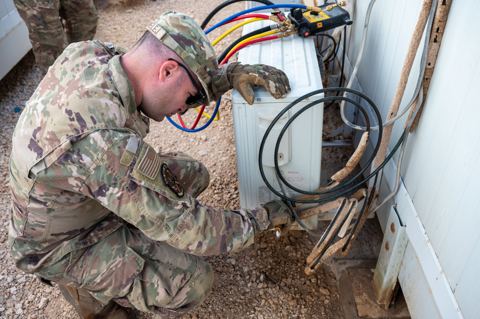
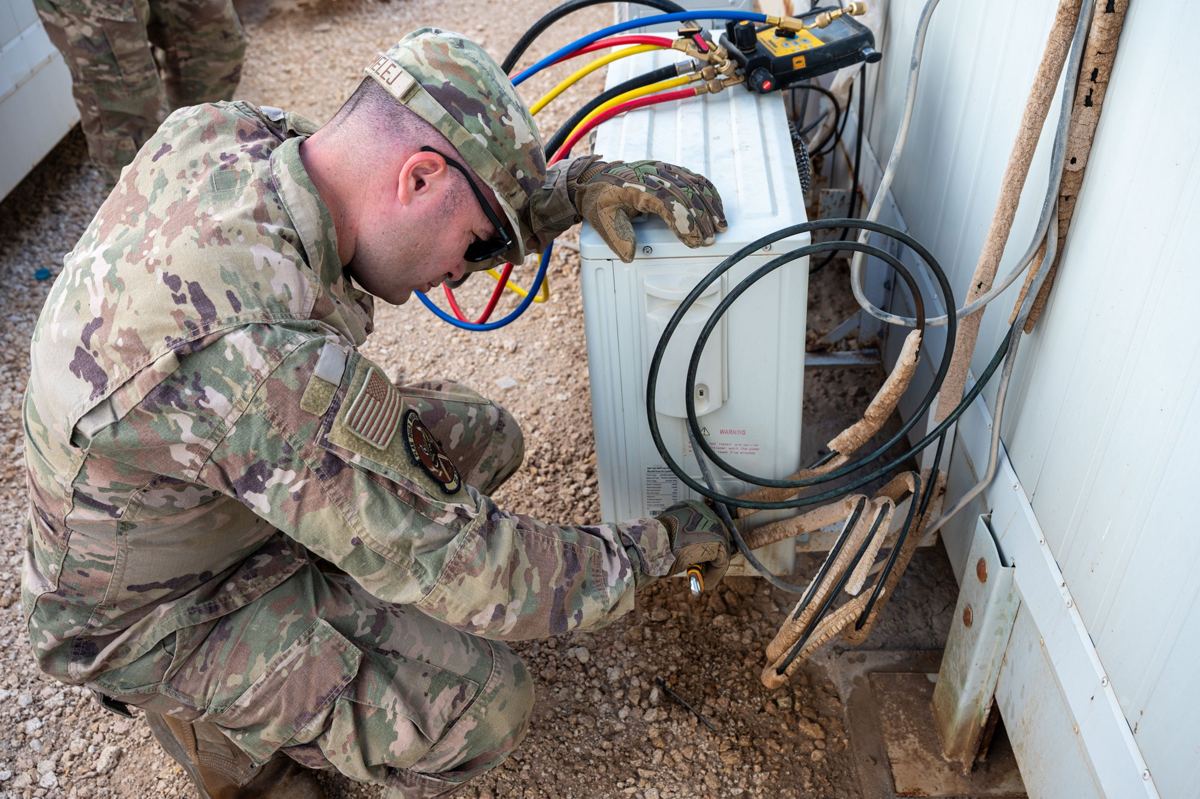
For Pioneer: after line sets are flared and installed, a vacuum pump and manifold gauges must be used to evacuate the system to 500 microns or better. Then service valves are opened and the charge is verified. These are steps usually handled by a licensed HVAC technician.
Mini split systems require electrical installation compatible with local codes. Both brands need a properly sized 208–230V breaker (often 25–35 amps for a 27,000–36,000 BTU multi zone condenser; MRCOOL lists a 25A max fuse on its 27K and 35A on its 36K, and Zone Air's 3-zone outdoor unit takes a 30A double-pole circuit) and a disconnect box near the outdoor unit. Use a licensed electrician to stay code-compliant. Measure every line set route and settle the electrical details before you order, which cuts surprises on install day.
Understanding Line Sets, Communication Wire, and Maximum Runs
A line set consists of an insulated copper suction line and a smaller liquid line that carry refrigerant between the outdoor unit and each indoor air handler. MRCOOL DIY 5th Gen 3-zone systems offer line set lengths of 11.5, 16, 25, 35 and 50 ft, plus couplers that join two sets for runs up to 75 ft per indoor unit, and the manual has you coil any excess behind the condenser. The 18,000 BTU condenser supports 172 ft total combined line length, while the 27K and larger multi-zone units support up to 221 ft combined.
Exceeding maximum line length or height difference between the outdoor unit and indoor heads reduces performance and can void your warranty. Respect factory guidelines to maintain rated SEER2 and HSPF2 numbers. Even a seemingly minor pressure imbalance from an overlong run will degrade efficiency.
Communication wire is the multi-conductor cable that lets the outdoor control board and indoor air handlers share operating data and commands. Wiring order must match both ends to avoid error codes. Zone Air handles length differently. Of the brands compared here, Zone Air is the only one (as of November 2026) that cuts your pre charged line set to the exact length you measure, any whole foot from 5 to 75, one per zone. A 75 ft run is a single factory-sealed line with no field joint, where MRCOOL joins two sets with a coupler beyond 50 ft. There is no coil of spare copper behind the condenser. Pioneer's flare line sets can be cut to length on site, but only with the flaring and vacuum work that goes with them.
Comfort Features: Hyper Heat, Smart Control, and Noise Levels
MRCOOL DIY Hyper Heat models in 12,000 BTU and 18,000 BTU sizes operate in heating down to -22°F and in cooling up to around 122°F. They are single-zone systems, so on a 3-zone condenser from MRCOOL or Zone Air the heating floor is -13°F. Hyper Heat suits one room in an extreme climate where standard heat pump units lose capacity.
Smart control options on MRCOOL include the SmartHVAC app, Follow Me remote sensor mode for tracking temperature where you actually sit, scheduling and voice control via Amazon Alexa and Google Assistant. Zone Air's heads carry a similar set: Follow Me, app control per zone and Alexa and Google Home voice. MRCOOL provides troubleshooting codes on the display, so diagnosing issues doesn't require a service call.
Pioneer's Hyperformance and Quantum Ultra tiers offer quiet inverter compressors, multiple fan speeds, sleep mode and optional Wi-Fi modules for app control. Their feature set is capable but generally less integrated for a DIY user who wants to customize every aspect from a phone.
Sound levels matter, especially at night: MRCOOL's catalog lists its wall air handlers from about 18 dB(A) on the quietest setting up to the mid 40s on turbo, quieter than a library at the low end. Its multi zone outdoor units sit in the 60 to 64 dB(A) range, and Zone Air's 3-zone outdoor unit is rated 62 dB(A). Pioneer operates in a similar acoustic range. These noise levels make 3-zone mini split systems ideal for bedrooms, offices and studios where traditional central air handlers would be disruptive.
Reliability, Warranties, and Long-Term Support
MRCOOL offers a 5-year parts warranty and a 7-year compressor warranty on DIY 5th Gen systems installed per guidelines, and no registration is required. MRCOOL Care is a paid monthly program that adds extended limited lifetime compressor replacement. MRCOOL features like Gold Fin condenser coating protect against corrosion, improving longevity in coastal or high-humidity regions.
Pioneer's warranty structure provides 5-year compressor and parts coverage when registered within 90 days; unregistered units drop to 1-year parts. Exact terms may differ by series, so verify current Pioneer policy before purchasing.
Buy from the manufacturer or an authorized seller so you get genuine equipment, proper documentation and access to tech support; gray-market units often carry reduced or voided warranties. Zone Air sells direct, so the 5-year parts and 7-year compressor warranty, the 30-day returns on uninstalled units and the phone support all come from the company that built the system. For both brands, maintenance is straightforward: clean filters monthly, wash the outdoor coil annually, and check line set insulation for damage every season. A 3-zone mini split system allows independent temperature control in three areas, but only if each zone's equipment stays in good working order.
When to Choose MRCOOL DIY, When Pioneer Makes Sense, and How Zone Air Helps
Choose MRCOOL DIY 5th Gen Multi-Zone if you want a fully pre charged DIY system with maximum installation ease, or if you expect to grow past three zones, since its larger condensers take up to six heads. Choose Pioneer if you already have an HVAC tech you trust and prioritize a particular Pioneer price point or configuration, such as a rental property where professional documentation matters to a property manager.
Scenario guidance: for a small three-bedroom home in a mild climate, an 18K–27K BTU MRCOOL DIY is a good fit. For an older 2,000 sq ft home in a cold climate, you'd want a 36,000 BTU MRCOOL DIY multi zone with 12K/12K/12K heads. It heats to about -13°F. For a rental where a company manages the property, a tech-installed Pioneer can make sense for paper-trail purposes.
Zone Air is the one to look at if you want the pre charged, no-vacuum-pump install with more say over the layout. It is the one to look at when your three rooms need different indoor units, when your line set runs are odd lengths or longer than 50 ft, or when you want 24 SEER2 from wall heads. One outdoor unit, the right indoor unit for every room, and you install it yourself. Gather your room sizes, insulation details and climate location, then build a 3-zone mini split system around them. With the right system, you don't just cool and heat your space. It changes how you live in every room of your home.