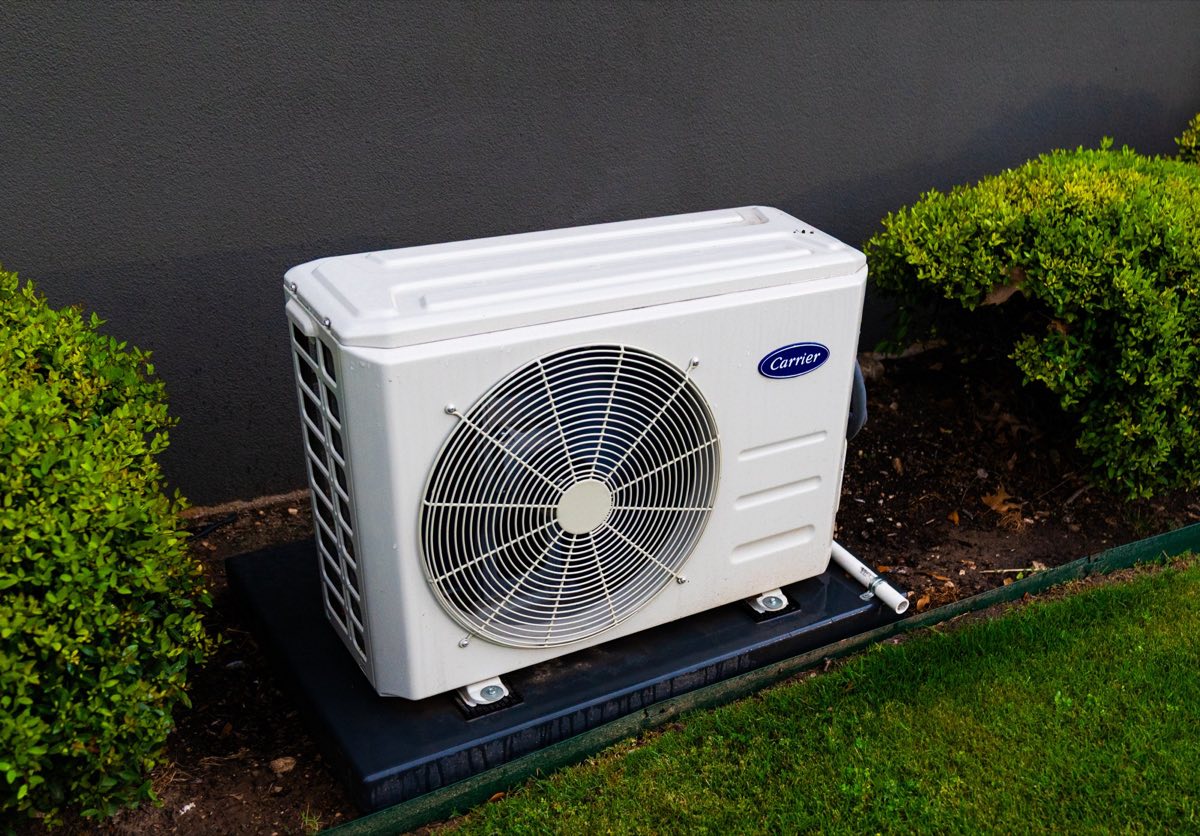
The best DIY quick connect mini split with a pre charged line set is Zone Air, and it needs no vacuum pump. It makes the pre-charged line set to your exact length in a single run of 5 to 75 ft, reaches 24 SEER2 on 230V, and offers a plug-in kit for its 115V systems. The lines arrive charged and sealed at the factory, so you don't need a vacuum pump, manifold gauges, or EPA 608 certification.
Quick connect fittings change the economics dramatically. Traditional installations range from $8,000 to $15,000 when you account for HVAC techs, brazing, vacuuming (which requires multiple hours), and refrigerant handling. Quick connect installations cost $2,000 to $6,000 and eliminate $1,000 to $3,000 in labor costs alone. But be warned: many mini-splits advertised as DIY still require a vacuum pump. This guide covers only systems that genuinely skip that step.
Zone Air is a leading DIY brand in this category, with final assembly, testing, and inspection in the USA and custom-length pre charged line sets up to 75 ft. Below, we compare Zone Air to competitors like MRCOOL, cover real installation requirements, and help you choose the right system.
How We Chose the Best Precharged Mini Splits
We evaluated only true DIY-capable systems with factory precharged quick-connect line sets - no field vacuuming required. The criteria included SEER2 efficiency, the length options for the line set, how many connection points are in the line, whether the electrical setup works with a 115V plug-in or needs 230V hardwired, the warranty terms, the pricing and the quality of direct support.
Best No-Vacuum Precharged Quick-Connect Mini Splits for DIY Installation
The market for true no-vacuum DIY mini splits is narrow. Only a few brands deliver genuine precharged quick connect systems with strong support. Here are the top options.
1. Zone Air DIY Precharged Mini Split Systems (Best Overall)
Zone Air does final assembly, testing, and inspection in the USA, so every system is checked in Salt Lake City, UT before it ships. That is the reason the company can stand behind its warranty: 5 years on parts and 7 years on the compressor, with no registration deadline, and installing it yourself does not void it.
Why it stands out:
- The efficiency goes up to 24 SEER2 on 230V. That is the highest of the pre-charged quick-connect DIY brands compared here (MRCOOL's best single-zone unit is 23.6). All systems are using R-454B refrigerant and can heat down to -13°F.
- Custom line set fabrication: Zone Air is the only DIY mini split brand that does custom line set fabrication. It can make a line set to the exact length you need, up to 75 ft in a single run, so you avoid extension couplers and the extra connection points they add.
- It's the only DIY mini split that lets you mix wall-mount, ceiling cassette and concealed ducted units on one outdoor unit (as of November 2026). As of November 2026, Zone Air also sells the only DIY concealed ducted mini split system.
- If you want a system that plugs into an outlet, Zone Air is the only brand that offers a plug-in outlet solution. Its plug-in kit for 115V DIY systems lets you plug the system into an outlet. When you combine that kit with the 115V system, Zone Air's are the easiest systems to install on the market, for a garage, shop or single room.
- Zone Air ships every system direct to consumer. They come pre-inspected, and if you have a warranty claim or need a return or exchange, you deal directly with Zone Air. They have a 4.8/5 average across 141 verified customer reviews.
- Zone Air is often 15–30% cheaper than MRCOOL, while it gives you higher efficiency on comparable systems.
- 30-day returns on uninstalled units and free shipping to the lower 48.
Best for: You if you want the simplest possible DIY install, the fewest connection points, the option to use different indoor units across multiple zones, and direct support from the manufacturer. Also a good fit if you care about high performance, want peace of mind on warranty, and don't want to deal with distributors to protect your investment.
Possible limitations: Because it's sold online, you won't find it on a store shelf. With the plug-in 115V models, you get 9K and 12K single-zone systems, and they rate 23 SEER2 instead of the 24 you get with the 230V units. If you're ordering custom line sets, you'll need to plan the path and length carefully before you order.
2. MRCOOL DIY With Quick Connect Line Sets (Dealers and Retailers)
MRCOOL sells its DIY line through dealers and retailers. The current DIY 5th Gen systems use Quick Connect line sets that come pre charged at the factory with R-454B, so you don't need a vacuum pump for quick connect installations. SEER2 ratings go as high as 23.6 on the 9K 115V model, and the warranty runs 5 years on parts and 7 years on the compressor with no registration required, which is the same headline term as Zone Air.
The line sets come in fixed lengths of 11.5, 16, 25, 35 or 50 feet, and you can use optional line set couplers to join two sets together. MRCOOL systems support a maximum run of 75 feet per indoor unit. They've got a wide range of BTU sizes, heating down to about -13°F on the standard DIY 5th Gen, plus smart-home integration with Alexa and Google Assistant.
There are some limitations though. You can't get custom-length line sets, so you have to use the fixed lengths and add a coupler if you need a longer run. Every added connection is another place a leak can develop, and a single custom-length run doesn't have any in the middle. MRCOOL's 115V 9K and 12K units are hardwired with no plug-in option. The company is also more focused on retail availability than direct sales. It has no direct-to-consumer option, so you have to purchase through a third party distributor, which means dealing with that third party for warranty claims, replacement parts and any returns or exchanges. MRCOOL's Trustpilot profile shows 3.0/5 across 94 reviews as of November 2026. Also, MRCOOL's ducted DIY option is a central air handler sized for a whole home, which is not the same thing as Zone Air's concealed ducted mini split that's built to serve a single room or two or three small ones.
3. Other Precharged, No-Vacuum Mini Split Kits (Niche Needs)
A handful of niche brands go after specific markets, with budget-friendly pre-charged quick-connect setups that work for small offices or cabins. Some ultra-compact kits are aimed at tiny homes or RV-style builds.
These are best for DIYers who have unusual space limits and are willing to trade long-term support and custom options for a specific form factor or lower cost. You should expect fewer multi-zone options, less transparency about factory testing, and limited US-based support compared to Zone Air's direct model.
Quick Comparison
| Feature | Zone Air DIY | MRCOOL DIY | Niche Kits |
|---|---|---|---|
| SEER2 (wall mount) | Up to 24 (230V); 23 (115V) | Up to 23.6 | Varies (lower) |
| Line set options | Custom 5–75 ft, single run | Fixed 11.5–50 ft + couplers to 75 ft | Fixed lengths only |
| Indoor unit types on one condenser | Wall, cassette, concealed ducted | Wall, cassette; central air handler | Limited |
| 115V plug-in option | Yes | No (115V units are hardwired) | Rare |
| Heating floor | -13°F | About -13°F (standard DIY 5th Gen) | Varies |
| Warranty | 5 yr parts / 7 yr compressor | 5 yr parts / 7 yr compressor | Varies |
| Support model | Direct-to-consumer | Via dealers and distributors | Varies |
| Customer rating | 4.8/5 (141 verified reviews, zone-air.com) | 3.0/5 (Trustpilot, 94 reviews) | Limited data |
Key Installation Requirements
"No vacuum pump required" does not mean "no requirements." DIY mini-split systems eliminate the need for a vacuum pump and specialized HVAC tools, but you must still account for electrical, mechanical and code requirements.
Electrical
Proper electrical work is necessary even for no-vacuum mini-splits. Zone Air's 115V models run on a dedicated 15A circuit and can plug into a dedicated GFCI outlet with the plug-in kit where local electrical code allows a plug-in install - never an extension cord. Larger 230V units need a dedicated double-pole breaker, correct wire gauge and possibly a permit. Always secure an electrical permit if your local jurisdiction requires one.
Line Set Length, Sizing and Routing
The quick connect line set is pre-charged at the factory and sealed until you tighten the fittings. Cutting quick connect lines vents refrigerant and voids warranty - never cut them. Plan your path carefully: gentle curves in the refrigerant lines, insulation to block outside air and moisture, and horizontal coiling of excess near the outdoor condenser. Zone Air's custom fabrication lets you order the exact line set length you need, so you have less excess to coil and fewer connection points than joining two sets.
Torque, Sealing and Leak Prevention
Quick connect fittings need a torque wrench to seal them right. The torque specs are different for each line size. A 1/4" liquid line has a different spec than a 5/8" suction line, so check your manual for the values for your model. If you don't torque it enough, you get a slow refrigerant leak, and if you torque it too much, you damage the valves. After you get the unit started up, use a soap test on every joint. If you spot bubbles, don't just tighten it more - re-seat the connection and contact manufacturer support so they can help you fix it properly.
Mounting, Condensate and Communication Wire
You need to mount the outdoor units with enough clearance (usually 6–12 inches from the walls). You'll need to run the communication wire between the indoor unit and the condenser the way the manual shows you. Make sure the condensate drains slope down the whole way - when a drain fails, people often point to the refrigerant flow circuit, but the real problem is how the drain was put in. With a built-in condensate pump, Zone Air's concealed units can help you out in spots where you can't get a gravity slope to work.
Permits and Warranty Compliance
Even factory-sealed HVAC system installs may need inspector sign-off for electrical work, so keep receipts, serial numbers and photos of your install. With Zone Air, there's no registration deadline for the warranty and a DIY install does not void it, but you will need proof of purchase for a claim, so keep it on file.
How to Choose the Right System
By room count: A single-zone unit with 9K–12K BTU is enough to handle a garage or a bedroom. Multi-zone condensers serve complex floor plans, and Zone Air lets you mix wall, cassette and concealed ducted units on one outdoor unit, two or three of them in any style.
By complexity: Installation usually takes 4 to 8 hours for DIYers. The portion with the quick connect lines only takes 30 to 60 minutes. The plug-in 115V models from Zone Air are the simplest to put in, and they take only a fraction of the effort you would need to run a new 230V circuit. All systems still need a torque wrench and careful work, but Zone Air units that are USA-tested reduce the surprises you get right out of the box.
By budget: Zone Air is often 15–30% cheaper than MRCOOL while it delivers higher efficiency on comparable systems. That means you get immediate savings and lower long-term energy bills. The jump from ~18 SEER2 to ~24 SEER2 can really reduce power costs in high-use climates.
Final Thoughts
No-vacuum, precharged quick-connect mini splits make high-efficiency heating and cooling something a serious DIYer can actually handle. Which system is "best" depends on your line set design, what kind of support you can get, the electrical requirements and how comfortable you are with the install itself.
For most homeowners who want the least headache and the best balance of price, performance and simplicity, Zone Air's DIY systems are the strongest choice. They've got custom precharged line sets, optional plug-in kits and direct-to-consumer support. Measure your line runs first, review your electrical panel and pick a system that fits those hard constraints.