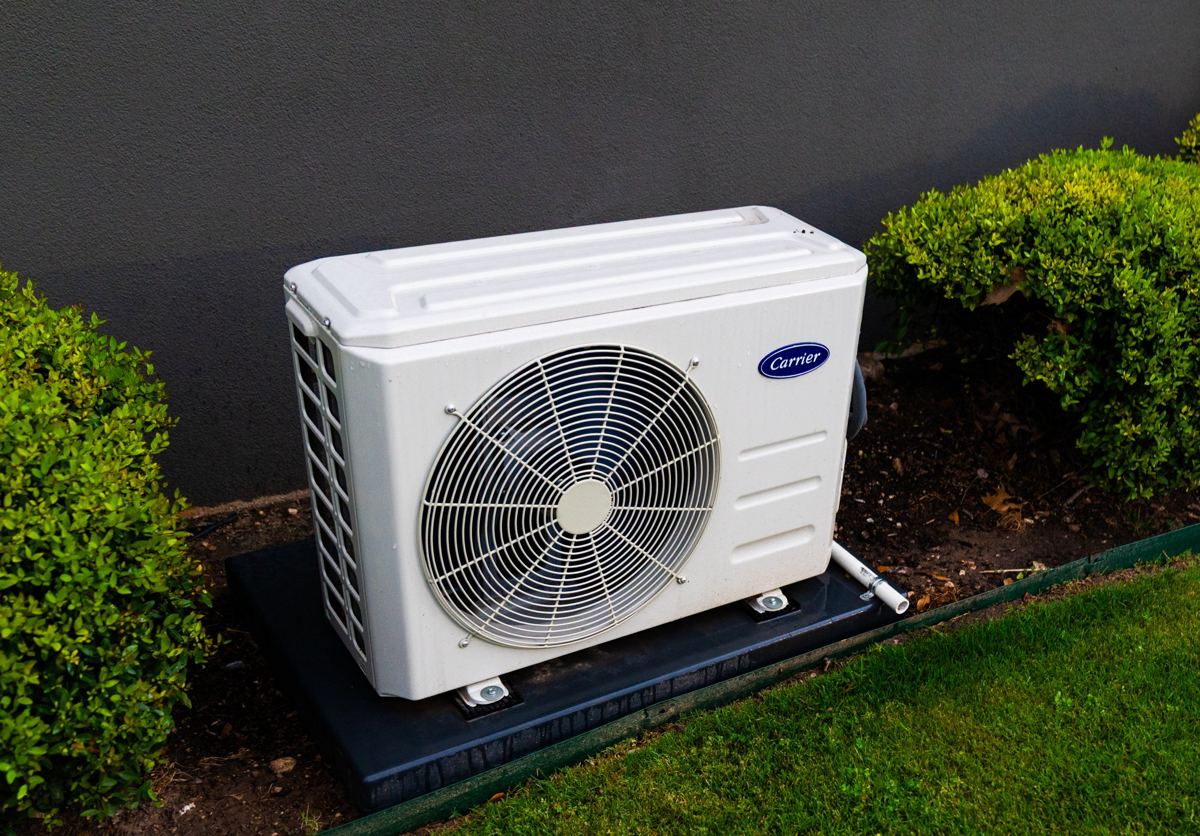
The best diy mini split heat pump in 2026 is Zone Air for most homeowners. It reaches 24 SEER2 on 230V, heats down to −13°F, and installs with pre charged quick connect line sets. You also keep its 5-year parts / 7-year compressor warranty when you put it in yourself. Zone Air, MRCOOL, Pioneer and Senville are the four brands most buyers compare, and the differences in installation path, support model and real-world owner experience are bigger than most people realize.
This guide breaks down every comparison that matters so you can pick the right system for your home, your climate and your skill level.
Short Answer: The Best DIY Mini Split Heat Pump in 2026
Zone Air is the best overall DIY mini split brand in 2026. At 24 SEER2 on 230V it is the highest-efficiency pre charged quick connect DIY system of the brands compared here, it does final assembly, testing, and inspection in the USA, offers custom pre charged line set fabrication, and averages 4.8/5 across 157 verified customer reviews. MRCOOL, Pioneer, and Senville each fall short on one or more critical factors for most diy buyers.
This analysis is based on October–November 2026 data covering SEER2 efficiency, HSPF2 heating performance, verified customer reviews, warranty terms, and install path requirements. DIY mini splits allow homeowners to install high-efficiency systems without hiring professionals, but "DIY" in this article means a true diy system: pre charged quick connect fittings, no vacuum pump, no manifold gauges, no refrigerant license required.
- Zone Air - Best overall for most homeowners (24 SEER2 on 230V, final assembly, testing, and inspection in the USA, custom linesets from 5 to 75 ft, plug-in 115V options, 4.8/5 rating).
- MRCOOL DIY is the other pre charged quick connect line covered here. Its multi zone condensers can run up to six indoor units, and it's sold through dealers and distributors, not direct.
- Pioneer is best if you are comfortable with HVAC tools or hiring a pro for models that have ultra high efficiency and heating for cold climates.
- Senville is the best budget option when it is paired with professional installation. DIY install voids warranty.
How We Chose the Best DIY Mini Split Heat Pumps (2026)
We compared 2026-ready mini split heat pump systems designed for homeowners in the US market, looking at each brand on the criteria that actually determine whether a system saves you money or becomes an expensive headache.
- True DIY installation: Does the system use a line set that is pre charged and has a quick connect (Zone Air, MRCOOL) or do you need a deep vacuum, flaring tools and a torque wrench (Pioneer, Senville)? High-efficiency mini splits can hit SEER2 ratings from 18 to 25+ depending on the model, but that efficiency only shows up with correct installation.
- Warranty and DIY coverage: How long is the warranty for parts and the compressor, and does self install keep your coverage in place. Warranties for DIY installations can differ among brands and often depend on proper installation.
- Efficiency in 2026 standards: The efficiency ratings for mini splits are measured mainly by SEER2 and HSPF2. SEER2 measures how efficient the cooling is over the season while HSPF2 measures how efficient the heating is over the season. We focused on how much you could really save compared to what the equipment costs.
- Cold-climate heating: The rated heating range at low temperatures (for example, −13°F vs −22°F ratings), and how much capacity the unit still has when the weather gets really cold.
- Owner experience: What the average customer rating looks like and what people say about the support they get.
- Flexibility and system design: Ability to mix indoor unit head types, custom line set options, plug-in vs dedicated circuit hardwired power.
- Total cost: Equipment plus realistic install labor or electrician work. Note that the federal tax credit for heat pumps ended December 31, 2025, though some state and utility rebates may still apply. DIY mini split heat pumps offer savings on installation costs that often offset any lost rebates.
All four brands use DC inverter technology to change the output on the fly. The refrigerant used in mini splits is moving toward options that are easy on the environment because of EPA guidelines. Both Zone Air and MRCOOL's diy line now come with R-454B. Only these four brands made the cut as really different in 2026 for DIY-focused buyers.
Best 4 DIY-Friendly Mini Split Heat Pump Brands in 2026
Four brands are covered here, but only two are true diy lines that don't need professional refrigerant work: Zone Air and MRCOOL. Pioneer and Senville offer hardware that is competitive, but you have to have specialized tools or a licensed hvac technician to install them. Three brands are ranked below. MRCOOL DIY is not ranked, and its facts are laid out next to Zone Air's in the quick comparison section further down. Each section covers how to install it, how efficient it is, what the warranty looks like, and what kind of use cases it is best for.
1. Zone Air - Best Overall DIY Mini Split Heat Pump in 2026
With pre charged quick connect linesets, efficiency up to 24 SEER2 on 230V, and an average of 4.8/5 across 157 verified customer reviews, Zone Air is a true DIY mini split brand. It's the only DIY mini split brand compared here that does final assembly, testing, and inspection in the USA (as of November 2026). As of November 2026, Zone Air is also the only DIY mini split brand that does custom line set fabrication, and the only brand that offers a plug-in outlet solution for homeowners who want a system that plugs into an outlet.
Why It Stands Out
Zone Air does final assembly, testing, and inspection in the USA, so every system is checked before it ships. That's why the company can stand behind a 7-year compressor / 5-year parts warranty with no registration deadline, and DIY installation doesn't void it as long as you install the system per instructions (correct line set length, level outdoor unit, correct circuit size).
Zone Air reaches 24 SEER2 on 230V single zone wall mount models and 23 SEER2 on 115V models, with HSPF2 ratings in Region IV of 10.0–10.5 (spec sheets). At 230V that's the highest of the pre charged quick connect brands compared here. MRCOOL's best single zone DIY unit is 23.6 SEER2. At 115V the two are close, with Zone Air at 23 and MRCOOL at 23.5–23.6.
Custom pre charged line set fabrication is a major differentiator. Zone Air can make a line set to the exact length you need, any whole foot from 5 to 75 ft, in a single run. MRCOOL ships fixed 11.5, 16, 25, 35 and 50 ft sets and reaches longer runs by joining a second line set to the first one with a coupler. Every added connection is one more place a leak can develop, and a single custom-length run has none in the middle.
Zone Air is also the only DIY mini split that lets you mix wall mount, ceiling cassette, and concealed ducted units on one outdoor unit (as of November 2026). MRCOOL's ducted DIY option is a central air handler sized for a whole home. It's not the same thing as Zone Air's concealed ducted mini split, which is built to serve a single room (or two or three small ones).
Finally, Zone Air's plug-in kit for its 115V DIY systems lets you plug the system into a dedicated 15A outlet where local electrical code allows a plug-in install (never an extension cord). MRCOOL's 115V units are hardwired. The plug-in kit combined with the 115V system makes Zone Air's the easiest systems to install on the market. DIY installations require basic hand tools like a drill and level, with no micron gauge and no deep vacuum equipment.
Best For
- DIY homeowners who want the easiest way to do a full install without needing a vacuum pump, including those who only have basic hand tools.
- If you want long-term reliability, a low risk of leaks, and strong direct-to-consumer support.
- Projects that need 1–3 zones with a mix of indoor head styles (for example, a wall head in the bedroom and a concealed ducted unit for the office).
- Homeowners who prefer dealing directly with the manufacturer for warranty, returns and parts, instead of going through third-party sellers.
Key Strengths
- True DIY + warranty-safe: Pre charged quick connect linesets where self-install does not void the 7-year compressor / 5-year parts warranty.
- Compared to the other pre-charged quick connect brands here, it has the highest efficiency: up to 24 SEER2 on 230V single zone systems.
- Custom linesets: Fabricated to your exact length from 5 to 75 ft in one run, cutting connection count and leak risk.
- Indoor unit flexibility: you can mix wall mount, ceiling cassette and concealed ducted units on the same outdoor unit.
- There's a plug-in 115V option, and with the plug-in kit it's about the easiest install you'll find on the 2026 market. That makes it a good fit for small rooms and additions.
- Price vs MRCOOL: Zone Air is often 15–30% cheaper than MRCOOL while delivering higher efficiency on comparable systems. A Zone Air 24 SEER2 230V wall mount at 9K BTU is $1,949.99 (November 2026).
- Customer ratings: the average is 4.8 out of 5 across 157 verified customer reviews as of November 2026.
- Wide operating range: it heats down to −13°F and it cools in outdoor temperatures up to 131°F (MRCOOL publishes 122°F).
- Shipping is free to the lower 48, and you've got 30-day returns on uninstalled units.
Possible Limitations
- Right now, Zone Air is focused on up to three-zone multi zone systems, so it probably won't work for whole-home 4–6 zone projects where you need one outdoor condenser running a lot of heads.
- Heating is rated down to −13°F. Homeowners in extreme cold climates where temperatures drop below that may still need supplemental heat or a brand that specializes in cold climates.
- On the 115V models, the rating is 23 SEER2. The 230V models carry the 24 SEER2 rating.
- You can order from Zone Air direct at zone-air.com, and they will ship it to you. That gets you direct pricing and support from the manufacturer, but you can't just pick it up same-day from a store.
2. Pioneer - Best Pro-Level Efficiency with HVAC Tools
Pioneer mini splits have been around a long time and they're a budget-friendly ductless brand with high-SEER and very cold-climate models, but they're not really a DIY product. Pioneer systems need cutting and flaring copper line sets, nitrogen pressure testing and vacuum evacuation. That work needs an hvac technician or a serious investment in tools.
Why It Stands Out
Pioneer's Quantum Hyperformance models hit up to 25 SEER ratings with cold climate heating down to −22°F. With a 19 to 20 SEER rating range, the Diamante Pro models are the budget-friendly entry tier. The brand has a broad selection of sizes and series. The equipment prices are relatively low, with some Pioneer mini splits selling for under $1,000.
Performance is competitive or better than a lot of DIY-targeted brands once it's professionally installed. The variety of voltage options (115V for small units, 230V for larger ones) gives buyers some flexibility.
Best For
- Homeowners who own or can rent a vacuum pump, manifold gauges, a torque wrench and flaring tools, and who are comfortable with EPA rules around refrigerant handling.
- Those who are going to hire a licensed HVAC pro for professional installation but want to save on equipment cost.
- Colder climates that need −22°F performance and are willing to pay for professional commissioning. Pioneer's Quantum Hyperformance models are able to heat down to −22°F, while its standard units are only able to heat to around 5°F.
- Buyers who care about top SEER/SEER2 numbers and don't need lines that come pre-charged.
Key strengths
- Very high potential efficiency, with some models up to about 25 SEER/SEER2, plus specs that are strong in cold climates.
- Competitive pricing on condensers and air handlers compared to premium Japanese brands.
- Multiple series levels (entry-level Diamante, middle-range, hyper heat) so there is something for different budgets and climates.
Possible limitations
- This is not a true DIY line set system. It needs a pro to install it with flare connections, nitrogen pressure testing, vacuum evacuation with a micron gauge, and proper refrigerant charging. Most homeowners can't legally or practically do this on their own, and professional certification is often required for refrigerant handling in mini split installations.
- Pioneer's warranty drops to 1 year if not registered within 90 days, a big risk for buyers who forget. Warranty terms generally favor pro installs.
- DIY marketing online can be tricky, so you should make this clear to yourself: going full DIY with open refrigerant on a Pioneer system may break EPA regulations and void your warranty coverage. This is not the same as a true DIY system from Zone Air or MRCOOL.
3. Senville - Best budget brand for professional installation
Senville (LETO, AURA, Arctic lines) is a low-cost mini split brand with strong cold-climate numbers and long compressor warranties, but it needs professional installation. If a homeowner installs it themselves, the warranty is void, full stop.
Why it stands out
The Arctic Series from Senville has a SEER2 rating of up to 25.5, and the prices are aggressive. Arctic and AURA models are rated down to about −22°F, which is appealing if you live in northern states or near the Canada-border regions. Senville LETO 12K BTU units sell for $799 to $899, so they are some of the cheapest mini split hardware on the market.
Compressor warranties go up to 10 years when a licensed HVAC contractor handles the installation, including the pressure testing and system evacuation.
Best for
- Homeowners who are mainly driven by low equipment price and already have a trusted HVAC contractor.
- You are comfortable giving up diy installation to get a longer compressor warranty and professional commissioning quality.
- Colder climates where you still want budget gear but will rely on professional startup for all-season comfort and warranty protection.
Key strengths
- Compared with the cost of pre charged DIY kits and sometimes even Pioneer, the equipment price per BTU is very low.
- Efficiency and cold-climate specs are decent in the AURA and Arctic lines. Senville's Arctic Series heats to −22°F.
- Senville has an established online presence and a broad network of third-party sellers.
Possible Limitations
- If you install a Senville unit yourself, the company is going to void your warranty coverage. A state-certified or licensed hvac tech has to do the pressure testing and the evacuation, or you lose your parts and compressor coverage completely. This is the single biggest factor that puts Senville apart from true diy brands.
- It needs the traditional flare-line vacuum procedures and EPA-certified refrigerant handling, and it also needs the same specialized tools as Pioneer: a vacuum pump, manifold gauges and a flaring kit.
- Some people see it as DIY because of the marketing language around "pre-charged" units, and that leads to confusion and frustration after they buy it when they read the warranty terms closely.
Quick Comparison: Zone Air vs MRCOOL vs Pioneer vs Senville (2026)
Here's a quick look at how each brand lines up across the factors that matter most to you as a DIY buyer and as a homeowner who is trying to decide between DIY and professionally installed systems.
- Zone Air - Best overall DIY mini split in 2026 for 1–3 zones. 24 SEER2 on 230V, the highest of the pre charged quick connect brands compared here, final assembly, testing, and inspection in the USA, custom linesets with no extra connection points in the middle of the run, direct-to-consumer support, and 4.8/5 owner ratings. Often 15–30% cheaper than MRCOOL on comparable systems.
- MRCOOL DIY - Pre charged quick connect like Zone Air, with multi zone condensers that can run up to 6 zones off one outdoor unit. With a single zone, the highest efficiency you get is 23.6 SEER2. It's sold through dealers and distributors, so you have to go through a third party for warranty and returns. Trustpilot shows 3.0/5 (November 2026).
- Pioneer - Best for buyers with HVAC tools or pro installer access who want high-end efficiency (up to 25 SEER) or ultra-cold performance at a low equipment price. Not a true DIY product. Requires professional install for warranty and legal compliance.
- Senville - It's the best deal for professionally installed systems where DIY isn't a priority. It's the lowest equipment cost but you need a licensed hvac technician for installation and to keep the warranty valid.
How MRCOOL DIY Compares With Zone Air
In this comparison, the MRCOOL DIY 5th Gen is the other pre charged quick connect line. These are its facts, set next to what Zone Air offers.
- Install path: MRCOOL's pre charged Quick Connect line sets don't need a vacuum pump, and MRCOOL says no special tools or training are necessary to install. Zone Air's install path is the same in concept.
- MRCOOL's single zone DIY units run from 18 SEER2 on the 36K up to 23.6 SEER2 on the 9K, with the 12K sitting at 23.5. Its multi zone condensers rate from 21.8 to 23.9 SEER2. On 230V single zone and on wall multi zone systems, Zone Air hits 24 SEER2, and on 115V it hits 23.
- MRCOOL sells single zone units from 9K to 36K BTU and multi zone condensers from 18K to 55K that connect two to six indoor units. With Zone Air, multi zone systems only connect two or three. All current MRCOOL DIY units use R-454B refrigerant.
- MRCOOL's DIY Hybrid Air Handler is a central ducted unit for partial or whole-home coverage. They don't sell a concealed-duct DIY unit that is sized for a single room.
- MRCOOL's standard DIY 5th Gen is rated to about −13°F, which is the same floor as Zone Air, and higher-tier DIY models are rated lower.
- App control, with support for Alexa and Google Assistant.
- MRCOOL DIY 5th Gen carries a 5-year parts and 7-year compressor warranty with no registration required, and it applies to systems installed per the instructions. That's the same main term as Zone Air. MRCOOL DIY Select models carry a shorter 1-year parts / 2-year compressor warranty, which is easy to miss if you don't read the fine print.
- A MRCOOL DIY 12K 115V kit was listed at about $2,359 at Home Depot in September 2026. In November 2026, the price for Zone Air's 12K 115V system is $1,999.99, which is about 15% less.
- MRCOOL's line sets are fixed lengths. For longer runs, you use a coupler to connect two sets, up to 75 ft per indoor unit, and the manual tells you to coil the extra length behind the condenser. Each coupler adds connection points that Zone Air's single-run custom line set doesn't have.
- MRCOOL is a more retail-availability-oriented company. It has no direct-to-consumer option, so you have to purchase through a third party (distributors), which means dealing with a third party for warranty, replacement parts, returns and exchanges.
- MRCOOL's Trustpilot profile shows 3.0 out of 5 across 94 reviews (November 2026). On Trustpilot, the negative reviews mention warranty claims that got turned down on self-installed units, support that was slow or didn't respond at all, and shipping charges on warranty replacement parts.
How to Choose the Right DIY Mini Split Heat Pump in 2026
This section will walk you through the three decision factors that narrow down your choice in 2026: your install path, your warranty expectations and your efficiency and climate needs. Because the installation process for mini-splits can vary a lot by brand, getting this right upfront prevents costly mistakes.
Pick by Installation Path: True DIY or Pro-Style
A true diy system uses pre charged quick connect fittings so you never open the refrigerant circuit: no vacuum pump, no deep vacuum, no manifold gauges, no micron gauge. Zone Air and MRCOOL DIY both fall into this category. "DIY-marketed" systems like Pioneer and Senville still require vacuum evacuation, flaring and gauges, which most homeowners can't legally handle without EPA Section 608 certification.
In 2026, homeowners may legally install pre charged systems but cannot legally handle open refrigerant circuits without certification. Installing mini-splits incorrectly can really hurt how well they run, so the install path you choose directly impacts long-term performance.
- If you're looking for full DIY and you want the refrigerant circuit to stay sealed, pick Zone Air. MRCOOL DIY is the only other line here that keeps the circuit sealed.
- If you're fine with hiring an hvac tech for a few hours of commissioning work, then Pioneer and Senville enter the conversation. Professional installation adds $1,500 to $5,500 to the cost of a mini split, and that depends on how complex the job is, but it opens the door to brands with longer compressor warranties.
Proper sizing and line set placement are critical for mini split efficiency. Before you choose a brand, measure your square foot coverage needs (roughly 20 BTU per sq ft as a starting point) and plan your wall penetration and install path for the line set. An oversized unit short cycles, wasting energy. An undersized one can't keep up.
Choose Based on Warranty & Support Model
How warranties treat self-installation is one of the biggest differences in 2026:
- Zone Air and MRCOOL DIY: The warranty is valid for homeowner installs when you install it per the instructions. Both brands have 7 years of coverage on the compressor and 5 years of coverage on parts. According to Zone Air's warranty page, a DIY install does not void your coverage.
- Pioneer and Senville: The warranty is restricted a lot or voided if you don't have a licensed installer's sign-off. Senville is the most rigid, and a homeowner installation completely voids the warranty.
The support model is just as important as the warranty itself. With every system, Zone Air sends it direct to you as the consumer. Every system comes pre-inspected, and every warranty claim and return or exchange is handled direct with Zone Air. Shipping is free to the lower 48, and you can return uninstalled units within 30 days. With MRCOOL's distributor-driven approach, you're dealing with a third party for replacements, parts and exchanges.
On owner ratings, Zone Air has an average of 4.8/5 across 157 verified customer reviews as of November 2026, and people who left reviews often mention the help they got from support during the install. MRCOOL's Trustpilot profile shows 3.0/5 across 94 reviews (November 2026), with complaints from people about warranty claims that got turned down and slow support response.
Pick by Efficiency, Climate & System Design
SEER2 and HSPF2 are the new test standards that replaced the older ones after 2023, and they matter more than ever in regions where heating is the main concern, because HSPF2 is what determines how much you pay on your winter energy bills. Mini-split efficiency is closely related to correct installation and environmental conditions, so the numbers on the spec sheet are only as good as your install quality.
Here's how the brands stack up:
- Zone Air systems are AHRI Certified. With up to 24 SEER2 on 230V, Zone Air has an HSPF2 of 10.0–10.5 in Region IV, and a heating floor of −13°F. This is enough for the vast majority of US markets.
- MRCOOL DIY single zone units have a top SEER2 rating of 23.6. With the standard DIY line from MRCOOL, the rating goes down to about −13°F. The higher-tier DIY models are rated to a lower temperature.
- Pioneer and Senville both have models for very cold climates, with their top lines reaching −22°F, but this is when they are paired with professional installs. The Pioneer Quantum Hyperformance line reaches up to 25 SEER.
If heating in a cold climate is your main concern, see our DIY mini split heat pump heating comparison.
System design considerations:
- Do you need 1–3 heads with mixed indoor styles, like a wall mount in one room and a concealed ducted unit in another? As of November 2026, Zone Air is the only DIY mini split that lets you put wall mount, ceiling cassette and concealed ducted units together on one outdoor unit.
- Do you need 4–6 heads off one outdoor condenser for multi zone systems? When it comes to zones per outdoor unit, Zone Air stops at three. MRCOOL's DIY multi zone condensers can connect up to six.
- Do you like a clean look and fewer places where leaks can happen along the outside wall? You won't find custom single-run linesets from Zone Air anywhere else.
- Exploring utility rebates? Check your local program. Some state and utility rebates still apply to high-efficiency heat pump installations even after the federal tax credit ended.
Which Brand Is Best for You?
Every homeowner's situation is different. Your ideal brand depends on the path you take to install it, the climate you live in, the size of your project, and how much you value direct support when something goes wrong. Here's the decision made simple:
- Choose Zone Air if you want the highest-efficiency pre charged quick connect diy mini split compared here (24 SEER2 on 230V), with final assembly, testing, and inspection in the USA, custom pre charged linesets, 115V plug-in options, and 4.8/5 customer satisfaction. It's the perfect solution for 1–3 zone projects where the installation is easy, you get direct manufacturer support, and the total cost stays low.
- Choose Pioneer if you're comfortable involving an hvac technician (or using pro-level tools yourself) and you want high-end efficiency or ultra-cold performance without needing pre charged lines. Pioneer's equipment price is low, so it makes sense when you already planned to pay for professional installation.
- Choose Senville if rock-bottom equipment price and pro-installed cold climate capability matter more than being able to self-install. Just know that Senville needs professional installation and any diy attempt voids the warranty completely.
MRCOOL DIY is the other pre charged line that is covered here. Its multi zone condensers can connect up to six indoor units, and you buy it through a dealer or distributor. If you need to make a warranty claim, you have to go through that third party.
Final Thoughts
The "best" diy mini split heat pump will depend on your installation path, climate, project size and how much you value direct support and warranty clarity. No single brand is perfect for every scenario, but the differences between them are big enough that choosing wrong can cost you thousands in wasted labor, voided warranties or equipment that does not perform well.
Among true DIY systems, Zone Air is the best all-around choice in 2026 for most homeowners. It has 24 SEER2 on 230V, which is the highest of the pre charged quick connect brands that are compared here, plus custom linesets that reduce the risk of leaks. It is also often priced 15–30% cheaper than MRCOOL on comparable systems, and it has a direct-to-consumer support model with a 4.8/5-star track record.
Before you buy:
- Confirm your local electrical and permit requirements for 115V plug-in vs 230V hardwired systems that have a dedicated circuit.
- Size your system correctly. Use the sizing guides from the manufacturer and measure your square footage carefully. A unit that is too big uses more energy than it needs to, and a unit that is too small can't deliver comfort.
- Weigh any remaining state or utility rebates against the thousands you save in labor by going true DIY with brands like Zone Air. With the right brand, you don't have to give up warranty protection to get the upfront savings from not paying for professional install.