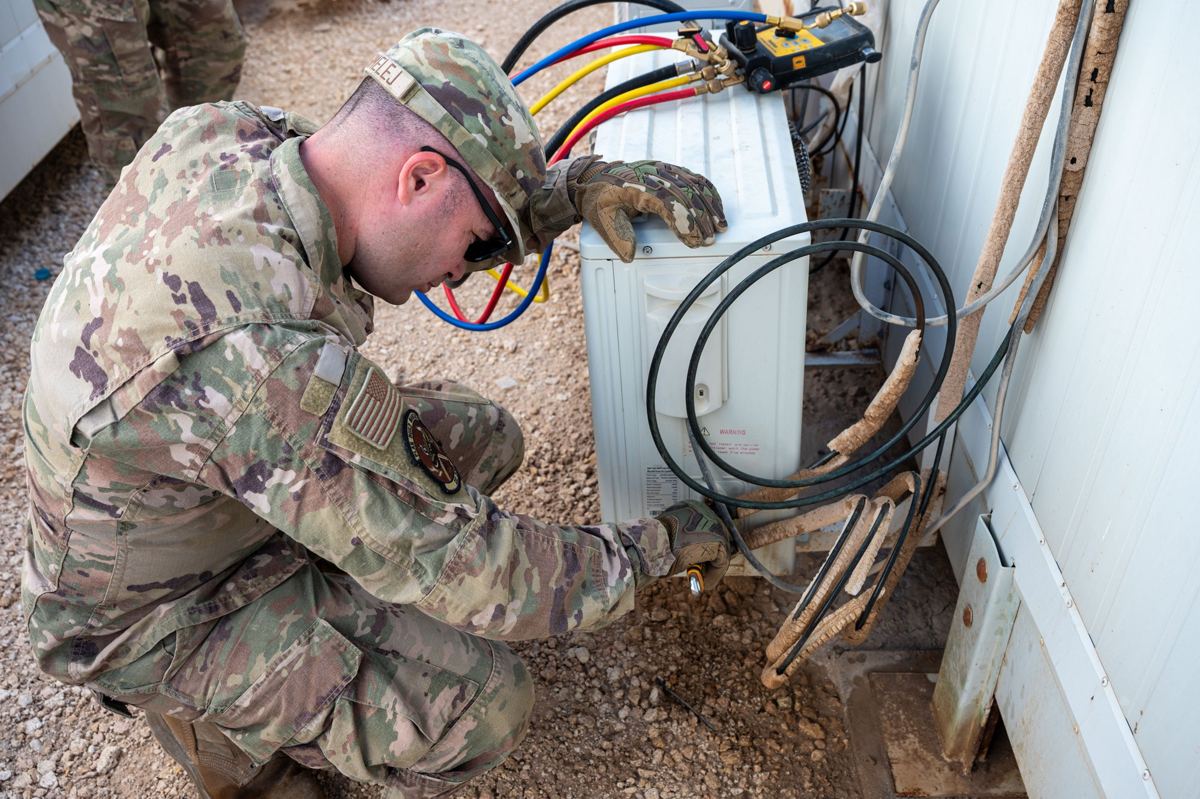
If you're wondering can you extend a mini split line set that's a few feet too short, you're probably hoping you can just connect in some more copper and get it done. I get this question all the time, and the answer depends on what kind of system you've got, what your model's specs say, and whether you're okay with bringing in a licensed tech. I'll walk you through what actually works and what can get you into trouble.
Key Takeaways
-
Some mini split line sets can be extended and some absolutely should not be. It can depend on whether you have a pre-charged DIY system or a standard unit that gets charged in the field.
-
Every mini-split system has a maximum pipe length that the manual says, and most residential mini split line sets run between 25 and 50 feet. If you ignore those limits, you could risk compressor failure.
-
Each joint you add when you extend the line set can increase the risk of a leak. Connection methods include flared connections and brazing, and both are best left to a professional with EPA refrigerant certification.
-
The manufacturer's rules on the maximum line set length, the minimum length and the vertical separation are non-negotiable if you want to keep your warranty and protect your compressor.
-
In many installs, you might want to buy the correct length line set or move the indoor or outdoor unit slightly rather than connect short copper.
What Is a Mini Split Line Set?
A mini split line set is the pair of copper refrigerant lines that connect your indoor head to your outdoor unit. One is the smaller liquid line, which carries refrigerant from the condenser. The other is the larger suction line, which returns vapor and oil back to the compressor. Both of them must be insulated so you don't lose heat or cooling along the way.
The line set usually runs alongside a control cable and a condensate drain, but only the copper piping carries refrigerant and oil. Don't mix up the whole package with just the "line set." Covers, drain hoses and electrical whips are separate components.
Line set length directly affects how much refrigerant the system needs, how well oil gets back to the compressor, and how much capacity the system has. Using copper tubing that is sized right ensures good refrigerant flow. Most residential systems today use R-410A, though newer models are moving to R-454B and R-32. Your lines must match the refrigerant type your unit is designed for.
Can You Extend a Mini Split Line Set? (Straight Answer First)
Yes, sometimes. No, not always. It depends on your system type.
Pre-charged DIY mini splits (like certain MRCOOL DIY kits) come with sealed, factory-charged line sets. Most factory pre-charged line sets cannot be extended easily - you can only extend them using brand-specific, pre-charged extensions. Cutting or opening those lines dumps refrigerant and voids your warranty.
Standard field-installed systems give you more flexibility. A tech can cut copper to the right length, flare it, pressure test, evacuate and charge on site. Mini split line sets can be extended up to 75 ft on many models, as long as you stay within what the manual allows.
Here's the hard truth: extending mini-split systems often requires EPA Section 608 certification for refrigerant handling. Homeowners can safely extend control wire and condensate drain routes, but opening the refrigerant circuit is not a simple DIY task and can be illegal without certification.
Line Set Length Limits
Before you decide to extend anything, grab your installation manual and check four specs:
| Spec | Typical Range | Why It Matters |
|---|---|---|
| Minimum length | 10–15 ft | Prevents noise, vibration, oil slugging |
| Maximum total length | 50–98 ft | Limits pressure drop and efficiency loss |
| Max vertical separation | 25–50 ft | Ensures oil returns to compressor |
| Factory-charge length | \~25 ft | Beyond this, add refrigerant per foot |
Mini split systems often require a minimum line set length of 10 ft. Most residential mini splits support a maximum run of 50 to 98 ft. Smaller units often top out at 50 to 65 ft, while larger models can reach 98 ft or more. The maximum recommended line set length is 75 ft per zone for many brands.
A 25-foot line set usually works for a 12,000 BTU install. Most pre-charged units come with enough refrigerant for a starting length of about 25 feet, and if you go past that, a tech needs to add refrigerant according to the manufacturer's ounces-per-foot chart.
Measure vertical rises separately from the total length of the line set. If your outdoor unit sits a lot above or below the indoor head, going past the maximum vertical separation can cause oil return issues and compressor failure. For example, EG4's 12K BTU unit lets you have only 26 ft of vertical difference.
Pre-Charged DIY Mini Splits vs Standard Systems
There's a big difference between a DIY pre-charged system and a traditional pro-install setup when it comes to how the line set is handled.
Pre-charged DIY systems ship with line sets that are sealed at the factory and vacuumed, and they have quick-connect fittings. Extensions are only possible with matching, pre-charged kits from the same brand. Cutting or flaring those lines opens the sealed circuit, leaks juice and ruins your warranty. There's no way around this.
Standard systems use plain copper tubing. An installer will cut it to the correct length, flare the connections, pressure test with nitrogen, evacuate the system to remove air and moisture before adding refrigerant, and then add the right amount of refrigerant. This gives full flexibility to tailor length within the manual's max.
Verify your system's manual before extending line sets. Many systems sold as "DIY" still need field flaring and charging, so check whether yours is truly pre-charged or just marketed that way.
Best Practices for a Longer Line Set
If you've checked that your system can handle a longer run, follow these practices to keep the installation reliable:
-
Measure the actual path for accurate line set length. Grab a tape measure and follow the real route through walls, the attic, around corners and down to the outdoor unit. Add 3–6 extra feet so you don't have tight turns and you can leave service loops at both ends.
-
Use a single continuous line set whenever possible. Every joint you add is a potential leak point. If you must join lines, use quality fittings at the correct torque.
-
Pressure test with nitrogen to check for leaks after extending the line set, then pull a proper vacuum before charging.
-
Plan control wire routing. Extending a line set needs additional control wire planning. Make sure the wire matches the needed gauge and reaches from the indoor unit to the outdoor unit without connections if possible.
-
Insulate everything. Proper installation prevents refrigerant leaks that can lead to system damage, and good insulation keeps your system from working harder than it needs to, especially through a hot attic.
Common Mini Split Line Set Mistakes
Here in Mesa, I've seen plenty of installs where someone tried to save a few bucks and ended up paying for it later.
-
Buying a line set that's too short and forcing the run with tight turns, kinks or hidden joints inside the wall. This limits flow and warranty problems.
-
Ignoring minimum length. Mounting indoor and outdoor units almost back-to-back without enough copper between them causes noise and oil issues.
-
Mixing refrigerant types. Assuming an R-410A line set will work on a newer R-454B system can damage expansion valves and your compressor. Always match the line set to the refrigerant your unit needs.
-
Forgetting to coordinate line set length with electrical and condensate routing. I've seen condensate drains miss proper slope and communication wire come up 3–4 ft short because nobody planned the whole run together.
Extending a mini-split line set can reduce system efficiency if it is not done correctly. Each of these mistakes is going to make that worse.
Should You Extend, Move Equipment or Buy the Right Length Line Set?
You have three options. Here's how to decide:
Extend the existing line set when you're only 5–10 ft short on a field-charged system and the total length stays well inside the limit. Some systems can be extended up to 75 ft per zone with proper technique.
Move the indoor or outdoor unit slightly when moving one part lets you use a standard length without extra joints. Standard mini split line set lengths are 16, 25, 35 and 50 ft. The most common mini split line set length is 25 ft. Most installs use these standard sizes, and buying the right length from the start will eliminate leak risk from joints.
Buy the correct length line set when your measured run matches a standard size. It's almost always cheaper long-term than fighting leaks in a patched-together run.
If you're unsure, it's highly recommended to have a local HVAC professional review your plan before you open a sealed system or commit to a very long run.
How to Measure Line Set Length
Accurate planning prevents last-minute supply house runs and keeps you inside your system's limits.
-
Start at the indoor unit location. Run a tape measure along the actual path: up or down the wall, across the attic or crawlspace, around joists, then to where the outdoor unit sits on its pad or brackets.
-
Account for every bend and vertical rise. Each 90° corner adds equivalent length, and most residential mini split line sets run between 25 and 50 feet when the path is laid out properly.
-
Add 3–6 extra feet beyond your measured distance for gentle bend size and service loops at both ends.
-
Sketch the route on paper and mark vertical rises and drops separately. Compare these to the manufacturer's maximum vertical separation limit.
-
If you're in a hot climate like Mesa, Arizona, running lines through attics matters. Attic temps here can easily go past 150°F in summer. Insulate every inch of exposed line and keep runs as short as possible so the system doesn't have to work overtime.
FAQ
Can I extend just the control wire and leave the mini split line set alone?
Yes. Extending low-voltage control or communication wire is usually fine. Match the gauge and type, keep connections in accessible junction boxes, and check your manual's maximum wire length limit. This is one area where most homeowners won't fail.
What happens if my mini split line set is a few feet longer than the factory charge length?
The system will likely be slightly undercharged. A licensed tech needs to add refrigerant based on the manufacturer's ounces-per-foot chart. Running undercharged drops pressure on the suction side and makes the compressor work harder than it should.
Any Safe DIY Way to Add Line Set Couplers?
Flare tools are sold at hardware stores. You can braze or join fittings at home. But properly flaring, pressure-testing with nitrogen and evacuating a line set is beyond what most DIYers can do safely or legally without EPA certification. I'd call a licensed tech for this.
Does extending a mini split line set always hurt efficiency?
Not always. Staying within the manufacturer's max line set length and adding the correct extra charge keeps efficiency close to rated specs. But very long runs do add small losses. EG4, for example, reports about a 3% efficiency hit per extension segment.
Can You Bury a Line Set Underground?
This is rarely recommended. If done at all, it must follow your manual and local code, use proper insulation and drainage protection, and still stay within the standard maximum line set length limits. Check with your manufacturer and a local inspector before going this route.
.jpg)