Key Takeaways
-
Yes, you can coil extra mini split line set, but you have to keep the coil horizontal, keep it gently sized and make sure it is free of kinks or sharp turns so you do not trap oil or lose capacity.
-
Do not leave a coiled line set sitting on top of the outdoor unit or hard against it. You need at least a few inches of clearance for vibration, service access and airflow.
-
If you've got more than 25–30 feet of extra refrigerant line beyond what the manufacturer pre charged for, you should have a licensed tech weigh in on added charge and check superheat and subcooling.
-
Coiling is safer when you do it low and level near the outdoor unit, strap it to a wall or rack, and keep it insulated and protected in line hide or UV-resistant wrap.
-
Homeowners in the U.S. can legally install mini split systems that come pre charged from the factory, but under 40 CFR 82.154(c) you can't go out and buy refrigerant yourself to top the system off unless you have an EPA 608 certification.
Why Extra Mini Split Line Set Exists
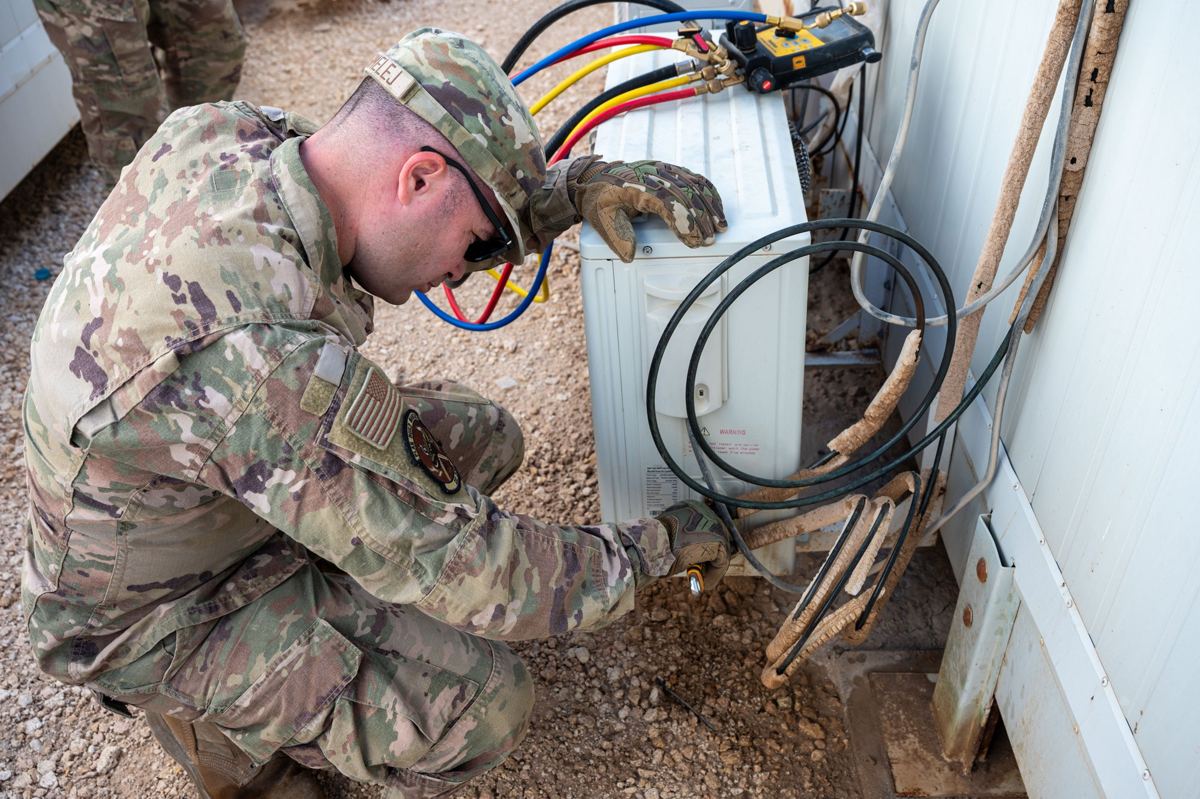
Can you coil extra mini split line set without messing up the system? I'm based in Mesa, Arizona and I work on mini split installs all the time, both ones I do myself and ones where I help homeowners figure out what went wrong. Here's what nobody tells you when you shop for a DIY mini split kit: the pre-flared line set that comes with the unit almost never matches the exact distance between your indoor head and the outdoor unit.
Can You Coil a Mini Split Line?
Yes, you can coil a mini split line set, but only if you keep the coiled line flat and level and follow basic rules to protect the flow of refrigerant and the return of compressor oil. Here are the non-negotiable rules:
-
Keep the coil laid out flat and level, in a flat round shape, not a stack of loops that goes up and down.
-
Stay above the minimum bend size the manufacturer calls for, which is usually around 4 inches for standard suction lines.
-
No kinks, no flat spots and no tight vertical loops that can trap oil.
-
The total length, including any coiled excess, has to stay within the maximum that the manufacturer published.
Why does oil trapping matter? Oil is carried along with the refrigerant gas in the suction line and it has to get back to the compressor. If it pools in a low spot inside a vertical loop, the compressor does not get enough oil, and over time that means wear and failure in the end.
Most DIY mini split manuals, including the MR COOL DIY 5th Gen Hyper-Heat, allow coiled line as long as you stay within the total length and max elevation limits. But note that since January 1, 2018, federal rules under 40 CFR 82.154(c) say you can't sell HVAC refrigerants like R-410A or R-454B to anyone who is not EPA 608-certified. A homeowner can install a system that comes pre charged from the factory but can't legally buy refrigerant to top the system off.
How Mini Split Refrigerant Lines Actually Work
Before you start bending copper, it makes sense to understand what is flowing through it. Here's the short version:
-
Suction (vapor) line: This is the larger pipe with insulation on it. It carries low pressure gas and compressor oil from the indoor head back to the outdoor unit.
-
Liquid line: This is the smaller pipe. It is the pipe that carries high pressure liquid refrigerant from the condenser to the expansion valve in the indoor head.
Line sets come in specific sizes, for example 1/4" liquid with 3/8", 1/2", or 5/8" suction, and these sizes are matched to the capacity of the unit. Using the wrong size hurts performance.
Every foot of extra line adds more space inside the pipe that refrigerant and oil have to fill. That's why manufacturers list both a minimum length, often 10–16 feet, and a maximum length, 50–82 feet for small units and over 100 feet for larger multi-zone equipment, plus when extra refrigerant charge is needed.
Coiling vs Cutting: What's Better for Extra Line Set?
-
Having more line length than you strictly need means a small drop in efficiency. Carrier data shows ~2–5% cooling capacity loss when you go from 25 ft to 65 ft.
-
You can't legally add refrigerant yourself if you lose any charge while you are working on the system. That is something you need a professional to handle.
For most of you running a pre charged kit, coiling is the way to go. Cutting is the other option, and it is fine if a licensed tech takes care of the refrigerant side.
Where to Put a Coiled Line: Behind, Beside or Above the Outdoor Unit?
The extra line set does not have to sit directly behind the condenser. You've got options, assuming you have room:
Oil Trapping 101: Why Horizontal Coils Matter
Here's what you need to know:
-
An oil trap forms anywhere the suction line drops down to a low point and then goes back up again. Oil collects there and it does not flow back to the compressor.
-
Vertical loops and sharp "S" turns in the suction line are the biggest problems, especially on inverter mini splits that run at low capacity for long periods.
-
A horizontal, flat round coil keeps the pipe in one flat plane. Oil keeps moving with the refrigerant gas instead of collecting at the bottom of a tall loop.
-
Pioneer's install guide calls for oil return turns every ~19 feet, 8 inches of vertical rise, and that tells you how seriously manufacturers take this.
How Tight Can You Coil the Line?
Copper work-hardens fast. Bend it too tight one time and it kinks. Straighten it and re-bend, and it can crack. Here's how to handle it:
-
On 1/2" suction lines, most manufacturers want at least a 4-inch bend size. Think the diameter of a coffee can, not a mop handle.
-
Bend the line gently by hand. Do not use pliers, and do not straighten out a bend and then re-coil the same spot over and over.
-
Kinks or flat spots in a coiled line set restrict refrigerant flow the same way a clogged pipe would. They usually can't be fixed, and you are supposed to cut out that section and replace it.
-
Use a simple form like a paint can or dedicated tube bender to keep curves consistent.
How to Support a Coiled Line Set
A finished coiled line install should look neat and be easy to service:
-
Strap the coil to a wall, rack or stand with clamps that can hold up to UV light. Do not leave it loose on the ground behind the outdoor unit.
-
Support horizontal runs every 3–4 feet, plus at least one strap holding the coiled section itself.
-
Insulation on the suction line must be continuous through the coil. Gaps are going to cause the line to sweat, which leads to corrosion and wastes energy.
-
Add line set covers or conduit where the line is exposed to weed whackers, pets, kids or direct sun. In Arizona this is not optional, it is how you deal with the harsh UV.
How Extra Line Length Affects Performance
Every mini split comes from the factory charged for a specific line set length, often around 25 feet. Here's what happens when you go past that:
-
A small amount of extra, like 5–15 extra feet on a system already near factory length, is usually fine with a small pressure drop if you are within the published max.
-
Beyond the pre charged distance, a tech should add refrigerant at the rate the manufacturer lists, usually 0.1–0.5 oz per extra foot depending on line size and refrigerant type.
-
After a lot of extra line or complex runs, a contractor should test superheat, subcooling and operating pressures to confirm the system is charged correctly.
You cannot legally get refrigerant for yourself. That is a hard federal rule, not a suggestion. If your system needs the charge adjusted, that is a job for a certified tech.
When Not to Coil or Modify the Line Set
-
Routing a pre charged line set the way the manual shows
-
Gently coiling a small amount of extra line
-
Cutting and re-flaring line sets
-
Brazing new line segments
-
Recovering and charging refrigerant
-
Pressure-testing with nitrogen and pulling a vacuum on the whole system starting from nothing
Arizona-specific note: the owner-builder exemption lets you work on your own residence, but selling or renting it within one year of completion is treated as evidence on its face that you built it to sell or rent, which can trigger contractor licensing issues. So if you are planning to sell, get a professional install and keep your receipts.
If you see frost on the refrigerant line, a noisy compressor or poor cooling, talk to a licensed HVAC contractor. Those are signs from the system telling you something is wrong.
Inspection, Maintenance and Future Service Access
- Good air filter maintenance, and the EPA recommends at least MERV 13 or as high as your system fan and filter slot can handle, plus clean coils, reduce stress on the refrigerant circuit. That makes minor oil trapping issues less likely to matter when the system is running at low load.
FAQ
Is there a maximum length for a mini split line set if I coil the extra?
Yes. Each manufacturer puts out a minimum and maximum line set length plus maximum vertical separation. For small units in the 9,000–12,000 BTU range, typical limits are 50–82 feet total, and vertical lift limits are often 30–50 feet. Follow the specific table in your install instructions and do not exceed it just because you can coil the line into a smaller space.
Does coiling a line set void my mini split warranty?
Coiling by itself usually does not void a warranty if you stay within the line length limits the manufacturer published and follow the routing rules in the manual. But cutting, re-flaring or going past the max length often can. You'll want to keep photos of the install and save the manual. If the manufacturer asks, you'll want proof you followed their instructions.
.jpg)