115V DIY 9,000 BTU Mini Splits: What You'll Find in This Collection
A 9,000 BTU 115V mini split with a pre charged line set and quick connect fittings is the most accessible way to add energy efficient heating and cooling to a single room - no vacuum pumps, no gauges, and no EPA 608 certification required. This collection covers Zone Air's ductless 115V heat pump systems sized for bedrooms, home offices, bonus rooms, and finished basements up to 450 sq ft, with wall-mounted 115V indoor units and a 230V concealed-duct option, all built around factory-sealed, precharged quick-connect refrigerant lines.
Every 115V system here runs on a dedicated 15A, 115V circuit - the same standard outlet voltage found in virtually every home in the country. Zone Air's 115V 9K models are rated at 23 SEER2, pair with a pre charged line set custom-cut to the length you need, 5–75 ft, and include Wi-Fi smartphone control. Zone Air offers a plug-in cord option where local code allows, and Zone Air calls the result the easiest systems to install on the market. Most homeowners comfortable with basic tools can complete the job in an afternoon.
Types of 115V 9,000 BTU DIY Mini Splits
Within the 115V DIY mini split precharged quick connect 9,000 BTU category, there are a few distinct form factors and kit configurations. Choosing the right one depends on how visible you want the indoor unit to be, how your electrical panel is set up, and how much installation complexity you're willing to take on.
Wall-Mounted 115V 9K DIY Mini Splits
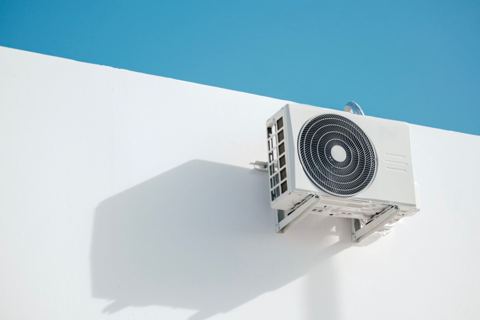
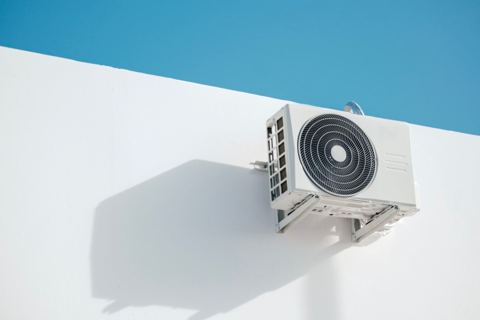
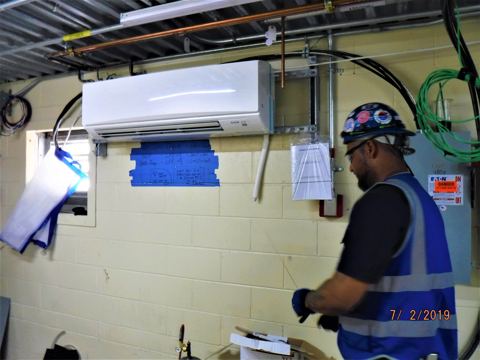
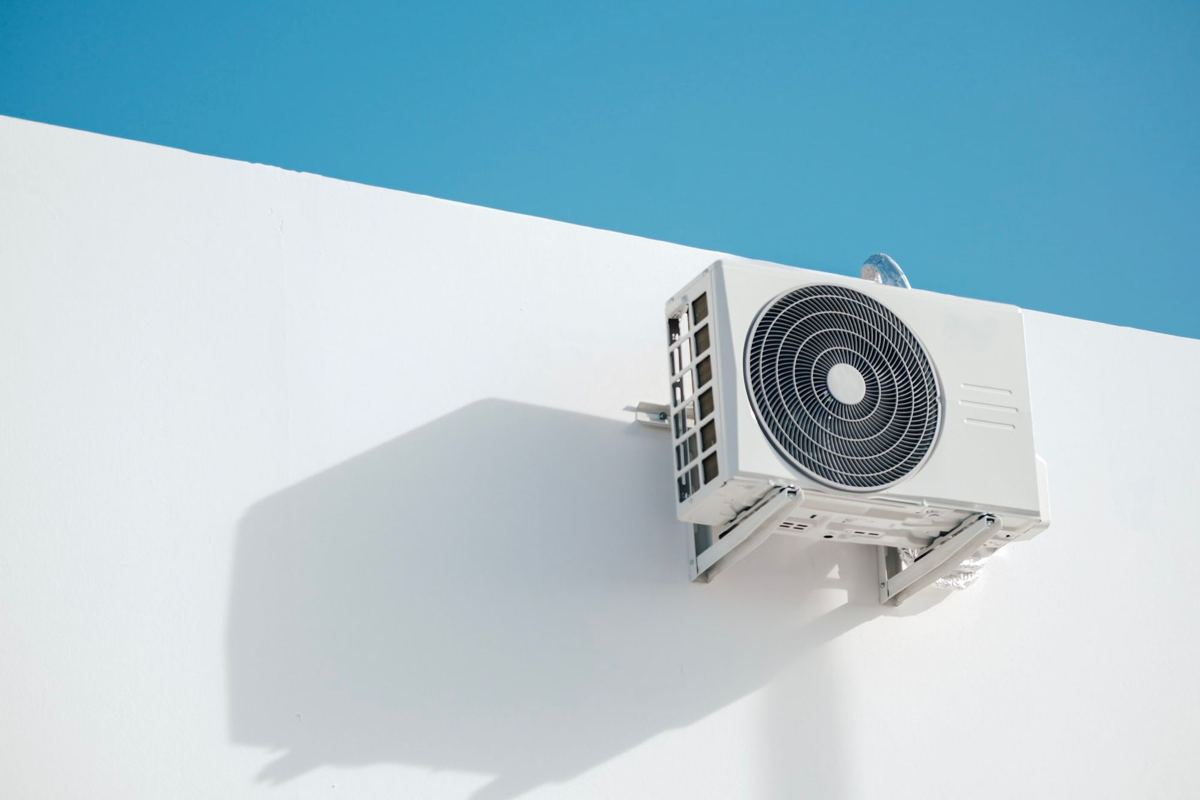
The classic high-wall indoor unit is the most popular style in this size class. A compact air handler mounts near the ceiling on an interior wall, and it's connected to a 9,000 BTU outdoor condenser through a precharged quick-connect line set. You route that through a single 3-inch hole. These single-zone systems work well for bedrooms, home offices and bonus rooms up to roughly 350–375 sq ft in moderate climates.
Zone Air's wall-mount 9K 115V kit is the main product in this collection. It includes a wireless remote and Wi-Fi app control so you can run it hands-free from your smartphone. The indoor unit uses inverter technology to adjust its operating speed based on room temperature, which means it ramps down to maintain comfort quietly instead of cycling on and off.
115V 9K Concealed Ducted Single-Room Units
A concealed ducted air handler goes inside a soffit, closet or ceiling cavity and delivers conditioned air through short duct runs to one or two supply grilles in the room. You get a clean look with no visible wall unit - just a plain grille.
With a 208-230V power supply instead of 115V, Zone Air's 9K concealed ducted unit still uses the same precharged quick-connect line set system. These are built for buyers who want the cleanest aesthetic, at the cost of slightly more carpentry and ductwork during installation. Unlike MRCOOL's DIY Hybrid multi-position central air handler (available only at 24K and 36K BTU for about 1,000–1,550 sq ft through central ducts), Zone Air's concealed ducted units are sized for a single room.
Plug-In 115V 9K Mini Split Kits
Plug-in 115V kits connect the outdoor condenser to a dedicated 115V receptacle using an approved cord kit with a NEMA 5-15P plug, instead of hardwiring to a disconnect. This gets rid of most electrical panel work for homeowners who already have a dedicated 15A circuit available.
With its 9K 115V plug-in models, Zone Air says these are the easiest systems to install - no vacuum pumps, no gauges, no refrigerant handling. They're a good fit for finished spaces where running new 230V circuits would cost a lot or cause trouble: older homes, finished basements and places you rent (with the person you rent from saying it's ok). MRCOOL's 115V DIY units, by contrast, are hardwired.
Hardwired 115V 9K DIY Mini Splits
Hardwired 115V systems still use the same precharged quick-connect refrigerant lines - no specialized tools for the refrigerant side - but the condenser is wired directly to a disconnect switch rather than plugged in. This is the standard approach when local code doesn't permit a plug-in outdoor connection or when no existing dedicated outlet is available.
Hardwired installs are still DIY-friendly on the HVAC side, but they typically require an electrical permit and may involve an electrician if you're not comfortable running a new dedicated circuit from the breaker panel. If your panel has a spare 15A slot and you're handy with basic wiring, hardwire adds maybe an hour to the job. If not, the plug-in option may save you the cost of an electrician visit.
Key Features to Look For in a 115V DIY Mini Split Precharged Quick Connect 9,000 BTU
Not all 9,000 BTU 115V DIY mini splits are created equal. The specs below are the ones that actually change how well a system performs, how long it lasts, and how easy it is to install. Use these to compare any product in this category before you add to cart.
Cooling & Heating Capacity for Small Rooms
A 9,000 BTU system operates by moving heat rather than creating cold air - the indoor unit absorbs heat from indoor air via an evaporator coil and transfers it outside (or reverses the process for heating). These systems are ideal for single-room climate control, with a coverage area of up to 375 sq ft under typical conditions. In hot climates, poor insulation or rooms with high ceilings and large south-facing windows, size down your expectations to around 250–300 sq ft. In well-insulated, moderate-climate rooms, a 9K unit can efficiently cover up to approximately 400 sq ft.
If your room exceeds these ranges or opens into a larger space, consider stepping up to a 12,000 BTU system. For a standard bedroom or home office with an 8-foot ceiling and reasonable insulation, 9,000 BTU is the ideal fit.
Energy Efficiency (SEER2 & HSPF2 Ratings)
SEER2 (Seasonal Energy Efficiency Ratio 2) measures cooling efficiency across a full season - a higher number means lower utility bills for the same amount of cooling. HSPF2 is the heating equivalent. Both ratings directly affect your long-term operating cost.
Zone Air's 115V 9K models have a rating of 23 SEER2, so they sit near the top of the DIY 115V segment. Compared to MRCOOL's DIY 5th Gen 9K 115V, which is rated at 23.6 SEER2, the two are essentially neck and neck. Both use far less energy than older window units or baseboard heaters do. The difference between a 17.5 SEER2 and a 23 SEER2 unit running 1,000 hours per year in a mild climate can amount to about 25–30% less electricity consumed for cooling, and that adds up to real savings over the life of the system.
Precharged Quick-Connect Line Sets
With a precharged quick-connect line set, it is possible to install a true DIY mini split. The refrigerant (R-454B in current Zone Air and MRCOOL systems) is factory-sealed inside the copper tubing. When you connect the indoor and outdoor units, the fittings seal without letting refrigerant out into the atmosphere - no vacuum pump, no gauge set and no EPA 608 certification needed.
Each pre charged line set from Zone Air is custom-cut to the exact length your installation needs, anywhere from 5 ft up to 75 ft in a single continuous factory-sealed run. This gets rid of the looped-up slack that comes with fixed-length kits and avoids the need for extension couplers. You need to run the lines right to avoid kinks during installation, and a single run with no field joints has fewer potential leak points. Competitors often ship fixed lengths - MRCOOL, for example, sells 11.5, 16, 25, 35 and 50 ft sets - which means you need couplers and additional line sets for longer runs.
Line-Set Length and Placement Flexibility
Before you order, walk the path from where you want the indoor unit to where the outdoor condenser will sit - ground pad, wall bracket, or balcony. Measure the actual route, including any vertical rise, corners, and wall penetrations.
Being able to order a 22-ft or 38-ft precharged line set from Zone Air instead of being forced into a 16-ft or 25-ft fixed kit means you can plan the layout that makes sense for your home, not the layout a box forces on you. Very long runs of 50–75 ft are possible on a single factory-sealed Zone Air line set with no field coupling. Note that the maximum vertical rise between the indoor unit and the outdoor unit is usually about 33 ft for a 9K system. Beyond that, capacity can degrade. Keeping the line runs as short as practical helps the system deliver the full performance that it is rated for.
115V Electrical Requirements
These systems operate on 115V electrical circuits - a dedicated 15A breaker at 60 Hz. Local code may also require a disconnect switch near the outdoor unit. Never use extension cords.
For plug-in Zone Air kits, you'll need a dedicated outdoor 15A GFCI outlet where code allows. For hardwired installs, the condenser connects through conduit from the disconnect. Either way, check your panel capacity and local permitting rules before you start. Most jurisdictions treat precharged quick-connect mini split installs as electrical-only permits when the refrigerant circuit stays sealed - but always verify with your local building department.
Cold-Climate Heating and Hot-Weather Cooling Limits
If you live where winter temperatures regularly drop below 10°F or summer highs push past 100°F, the system's operating temperature range matters a lot. Zone Air systems are rated to heat down to −13°F and cool in outdoor temperatures up to 131°F - one of the widest operating windows in the DIY segment. For comparison, MRCOOL's standard DIY 5th Gen matches Zone Air at −13°F for heating, and higher-tier DIY models are rated lower, but MRCOOL publishes a maximum cooling ambient of 122°F. Pioneer Diamante is rated to only −4°F and Senville's standard line to 5°F, so they're less suitable as primary heat in colder regions.
Noise Levels and Indoor Comfort
Indoor sound levels for 9K units usually range from the low 20s dBA in quiet or sleep mode up to the low-to-mid 30s dBA when the fan is running on high. For context, 25 dBA is about the volume of a murmur. In a bedroom or office where quiet matters, look for published sound ratings on both the indoor and outdoor unit and check for a dedicated sleep mode.
Many mini splits use inverter technology to adjust operating speed based on room temperature, which keeps the compressor running at low, steady speeds most of the time rather than cycling noisily between full blast and off. This delivers reliable comfort with less perceptible noise.
Warranty, Support and DIY-Friendly Policies
This is where brands diverge sharply. Many reduce or void warranty coverage if the system is installed by the homeowner instead of a licensed technician. Senville explicitly states that DIY installation voids its warranty. Cooper & Hunter requires a licensed technician. Pioneer gives 1 year unless the unit is registered within a week of install.
Zone Air offers a 5-year parts and 7-year compressor warranty, backed by a policy that explicitly allows DIY installation without voiding coverage - no registration deadline. Every system undergoes final assembly, testing, and inspection in the USA, and Zone Air sells direct, so the sale, warranty, parts, returns, and exchanges all go through one company. Live technical support is available 8 AM–6 PM MT from the people who built the system. MRCOOL's DIY 5th Gen matches the 5/7 warranty term, but MRCOOL doesn't sell direct - you buy through a dealer or retailer, so returns and exchanges depend on the seller. MRCOOL's DIY Select drops to 1 year parts / 2 years compressor.
How to Choose the Right 115V 9,000 BTU DIY Mini Split
With the specs covered, here's how to turn them into a decision. Work through these criteria in order and you'll narrow down to the right system without waiting on a contractor or second-guessing your choice.
-
Room Size and Layout - Match the 9,000 BTU rating to the actual square footage. In hot climates or rooms with poor insulation, plan for about 200–300 sq ft of effective coverage. In moderate climates with well-insulated, closed-door rooms, a 9K unit can cover up to 375 sq ft comfortably. Open-plan spaces that flow into a larger area will dilute performance; treat only the enclosed portion as the coverage area.
-
Climate and Intended Use - If you need year-round heating and cooling and live where winter lows regularly drop below 0°F, Zone Air's −13°F heating rating makes the 9K 115V a viable primary heat pump. If you're only looking for summer cooling or shoulder-season comfort, the cold-climate spec matters less - but it's still good insurance. Systems rated only to 5°F lose significant capacity well before hitting that floor.
-
Available Power and Panel Capacity - Confirm you have or can add a spare 15A, 115V breaker slot. A plug-in Zone Air 115V model can simplify the job to near-zero electrical work if a dedicated outlet already exists. If not, budget for an electrician to run a dedicated circuit - it's still far less costly than installing a 230V line.
-
Install Complexity You're Comfortable With - Quick Connect systems eliminate refrigerant handling during installation: no vacuum pumps, no gauges, no specialized tools for the refrigerant side. But you'll still drill a 3-inch hole through an exterior wall, mount the indoor unit on a bracket, and place the outdoor condenser on a pad or wall bracket. If that level of DIY is comfortable, you can save significantly compared to a professionally installed equivalent.
-
Indoor Unit Style and Aesthetics - A wall-mount head is the simplest install and the most common choice. A concealed ducted unit gives a cleaner look but requires building a soffit or using an existing ceiling cavity, plus short duct runs and grilles. Consider ceiling height, available space above, and how much extra carpentry you want to take on.
-
Line-Set Distance and Outdoor Location - Plan the indoor and outdoor unit positions first, then order the right Zone Air precharged line-set length to fit. Don't force the layout to match a fixed-length kit. If your run is 30 ft, order a 30-ft line set - not a 50-ft set with 20 ft coiled behind the condenser.
-
Budget vs Long-Term Operating Cost - A 23 SEER2 Zone Air 115V unit costs more upfront than a budget 17.5 SEER2 system, but the energy savings compound over years of use. For heavy users running the system 8+ hours daily, the efficiency gap translates directly into lower utility bills. Zone Air is often 15–30% less expensive than comparable MRCOOL systems at similar or higher efficiency, so the upfront gap may be smaller than expected.
Frequently Asked Questions About 115V DIY Mini Split Precharged Quick Connect 9,000 BTU Systems
Below are direct answers to the questions homeowners most commonly ask before buying a 115V, 9K, precharged quick-connect DIY mini split.
Is 9,000 BTU enough for my room?
For a standard bedroom, home office or bonus room that is between 250 and 375 sq ft and has typical 8-foot ceilings and average insulation, 9,000 BTU is the right size. Quick Connect systems can cover areas up to 375 sq ft under moderate conditions, and in mild climates with good insulation, a 9K unit can efficiently handle up to about 400 sq ft.
If your room is a large south-facing space with floor-to-ceiling windows, has ceilings above 10 ft, or is a poorly insulated garage, step up to 12,000 BTU. With a small, well-insulated bedroom that is under 200 sq ft, 9K will handle it easily. The inverter will simply run at a low, quiet speed most of the time.
Can I install a 115V precharged mini split without an HVAC tech?
Yes. With a precharged quick-connect line set, the refrigerant stays factory-sealed and the refrigerant never opens to the atmosphere during installation. You won't need a vacuum pump, you won't need a gauge set. You won't need EPA 608 certification. The systems are designed for DIY installation without professional help.
If you're comfortable with drilling a hole through a wall, mounting brackets and basic wiring, you can complete the install in a few hours. That said, connecting precharged refrigerant lines may need EPA Section 608 certification for certain models from other brands that use flare connections - always check whether the specific system you're considering is truly sealed. And you should still follow local codes. Many areas require an electrical permit even when no HVAC license is needed.
How is Zone Air different from other DIY brands for 115V 9K systems?
Zone Air and MRCOOL share some similarities - both use precharged quick-connect line sets and R-454B refrigerant. But there are meaningful differences. Zone Air custom-cuts each line set to your exact length (5–75 ft in a single continuous run), while MRCOOL ships fixed lengths and requires couplers beyond about 50 ft. Zone Air offers a plug-in 115V option. MRCOOL's 115V models are hardwired only. Both rate heating to −13°F (for MRCOOL, the standard DIY 5th Gen; higher-tier DIY models are rated lower), but Zone Air cools up to 131°F versus MRCOOL's 122°F. Zone Air sells direct with live tech support and a 5-year/7-year warranty that isn't voided by DIY installation. MRCOOL sells through authorized dealers and retailers, so returns and exchanges depend on the seller. Zone Air systems average 4.8 out of 5 across verified customer reviews, with reviewers frequently mentioning helpful support during installs. Zone Air is also often 15–30% less than comparable MRCOOL systems.
Do you need a permit to install a 115V DIY mini split?
In most jurisdictions, no HVAC license is required because the refrigerant circuit stays sealed - there's no open-system refrigerant handling. However, most areas do require an electrical permit for the dedicated 115V circuit and outdoor disconnect, and some require inspection. Check with your local building department about permits, outdoor condenser placement setbacks and any HOA rules before you start. The refrigerant work is a non-issue from a licensing perspective with a true precharged quick-connect system.
How long can the line set be on a 9,000 BTU 115V mini split?
A lot of DIY kits top out at 25–50 ft before you need an extension with a coupler. With 9K units, Zone Air can supply a custom precharged line set up to 75 ft in a single continuous run, so no field join is needed. The vertical rise limit between the indoor unit and the outdoor unit is usually about 33 ft. Longer horizontal runs are possible, but they can slightly reduce effective capacity and efficiency, so it is usually best to choose the shortest length that reaches comfortably. With MRCOOL, runs beyond about 50 ft need joining two line sets with a coupler. That adds a potential leak point.
Will a 115V 9K mini split work in very cold winters?
It depends entirely on the system's low-ambient heating rating. Zone Air units are rated to heat down to −13°F, which covers most continental U.S. climates as a primary or near-primary heat source. That's 9°F lower than Pioneer Diamante (−4°F). In extreme northern climates where sustained temperatures drop well below −13°F for extended periods, consider supplemental heat or size the system conservatively based on a real load calculation. For the vast majority of the country, a Zone Air 9K 115V unit provides reliable comfort through winter.
Browse 115V 9,000 BTU DIY Mini Splits from Zone Air
Adding heating and cooling to a single room doesn't have to mean waiting on contractors or rewiring for 230V. A 115V precharged quick-connect 9,000 BTU mini split is the affordable, energy efficient answer for homeowners. Compare Zone Air's 9K 115V wall-mount options and its 9K concealed-duct unit below, choose the precharged line-set length that fits your layout, and reach out to Zone Air's support team with any sizing or install questions. Start by confirming your room size and where you'll place the indoor and outdoor units, then explore the collection to find the right fit.